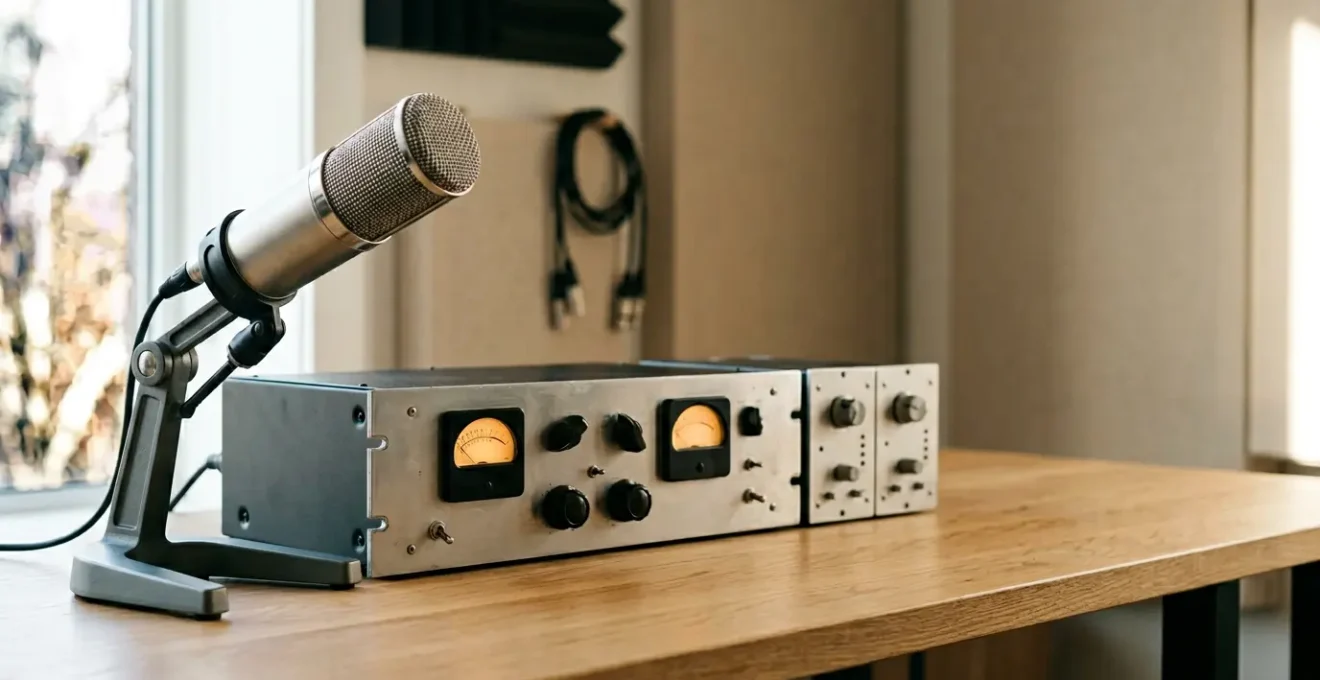
The key to building a studio with lasting value is to stop thinking like a musician and start thinking like an investment broker: your gear is not a collection of tools, but a financial portfolio.
- Most new equipment depreciates instantly, making brand-chasing a losing game. Smart money focuses on an asset’s long-term market behavior, not its marketing.
- A balanced studio portfolio allocates capital between appreciating « blue-chip » hardware, depreciating « workhorse » essentials, and zero-equity digital tools.
Recommendation: Shift your focus from buying the « best » gear to acquiring the right mix of assets. Prioritize used, repairable hardware with a proven history of value retention for the core of your investment.
For any home studio owner, the cycle is painfully familiar. You invest a significant sum into a promising piece of equipment, convinced it’s the missing link to professional sound. Yet, a few years later, its value on the second-hand market has plummeted, leaving you with a fraction of your initial investment. The common advice—buy from legendary brands, chase vintage mystique, or get the latest digital powerhouse—often leads to the same financial dead end. This approach treats gear acquisition as a shopping spree, not a calculated financial strategy.
The truth is, the world of professional audio equipment operates on clear economic principles, much like any other market for hard assets. Some items are built to be disposable commodities, while others are crafted as long-term instruments of value. According to some audio gear market discussions, new equipment can lose up to a third of its value the moment it leaves the store. This immediate depreciation is a brutal reality that casual buyers often ignore, focusing only on the creative potential without weighing the financial risk.
But what if you could build your studio differently? What if, instead of just buying tools, you were curating an asset portfolio? The fundamental shift is to move beyond the question of « What sounds best? » to « What represents a sound investment? » This guide will reframe your approach to studio budgeting. We will not provide a simple shopping list. Instead, we will equip you with a broker’s mindset to analyze, acquire, and manage your studio gear as a collection of assets designed to maximize both your creative output and your long-term financial return on investment.
This article provides a structured financial framework for making smarter purchasing decisions. We will explore how to allocate a budget, evaluate hardware versus software, inspect used gear to avoid costly mistakes, and maintain your assets to protect their value.
Summary: A Broker’s Framework for Audio Gear Investment
- Why an Expensive Preamp Won’t Fix a Bad Performance?
- How to Split a $5000 Studio Budget for Maximum Quality?
- Analog Compressor or Digital Emulation: Is the Hardware Worth the Extra $2000?
- The Inspection Mistake That Costs $500 When Buying Used Microphones
- Problem & Solution: Eliminating Ground Loops in a Complex Setup
- Sequencing & Planning: A Yearly Maintenance Checklist for Vintage Gear Owners
- How to Save 40% on Studio Costs by rehearsing with a Click Track?
- Why Your Mixes Translate Poorly Even With Expensive Monitors?
Why an Expensive Preamp Won’t Fix a Bad Performance?
One of the most common and costly mistakes in home studio investment is believing that a high-end piece of hardware, like a boutique preamplifier, can magically transform a poor source recording. This is the financial equivalent of putting premium tires on a car with a broken engine. The preamp can only amplify what it receives; it cannot invent quality that isn’t there. A weak vocal performance, a poorly tuned drum, or a guitar played in an acoustically flawed room will only sound like a more expensive version of that same flawed source, not a professional recording. This is the first principle of audio investment: the source is king, and any capital spent trying to circumvent this rule is wasted.
From a broker’s perspective, this is a misallocation of capital. You are investing heavily at the wrong stage of the production chain. The gear that holds its value is often gear that is « built to a spec, not a price. » However, even the best-built preamp is a poor investment if it’s not supporting an already excellent performance and recording environment. The true return on investment at the initial stage comes from elements that have little to no resale value but an enormous impact on quality: vocal coaching, new drum heads, professional instrument setup, and basic acoustic treatment.
If it was built to a price rather than a spec, it probably won’t hold its value.
– Production Expert, What Gear Holds Its Value? Smart Investments in Audio Equipment
Therefore, before even considering gear that retains value, you must first ensure your foundational elements are solid. Spending $2000 on a preamp to amplify a $100 microphone in an untreated closet is a guaranteed financial loss. Spending $500 on room treatment and performance coaching to elevate that same $100 microphone, however, produces a far superior asset—a clean, professional recording—that justifies future, more strategic hardware investments.
How to Split a $5000 Studio Budget for Maximum Quality?
Viewing your studio through a financial lens requires a portfolio-based approach to budgeting. Instead of buying gear haphazardly, a savvy investor allocates capital across different asset classes based on their function, depreciation rate, and potential for appreciation. For a typical home studio owner with a $5000 budget, a balanced strategy prevents over-investing in rapidly depreciating assets while securing a core of value-retaining equipment. This is not about finding the « best » gear, but about creating the most resilient and productive financial ecosystem.
The most effective model is the 40/40/20 split, treating your studio like a small investment fund. This structure provides immediate utility while building long-term equity.
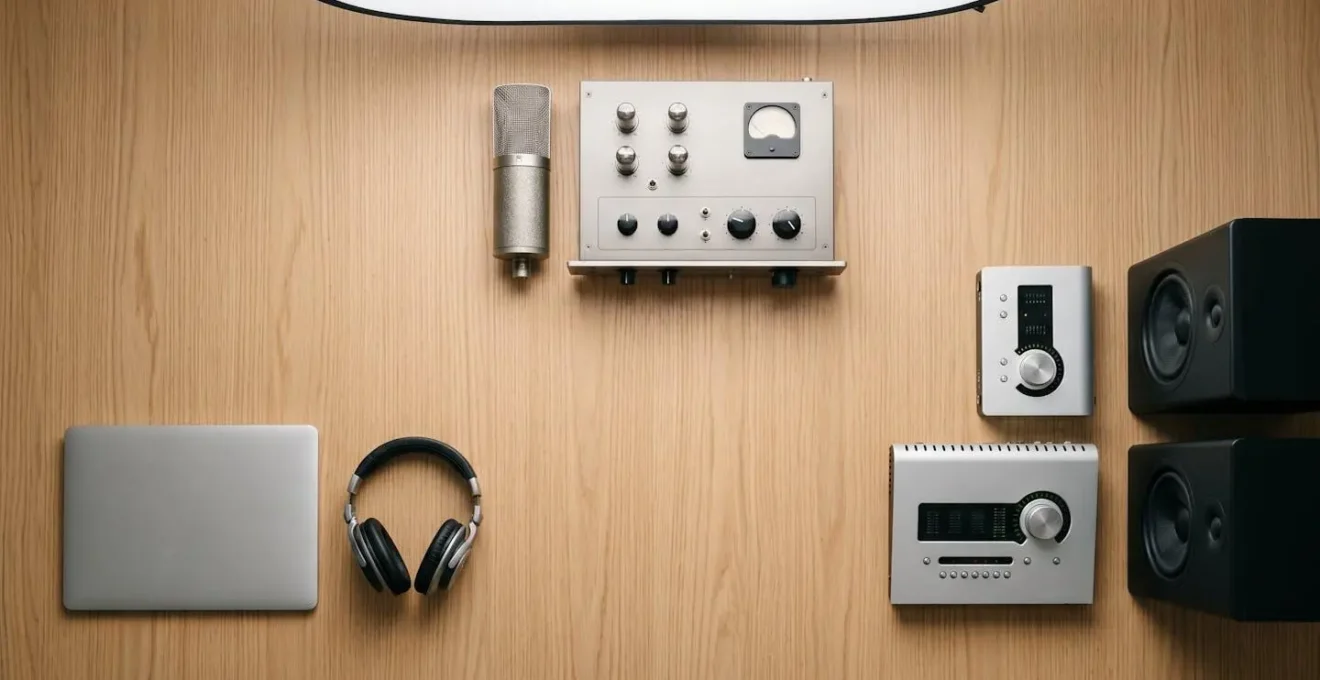
This visual representation shows how to strategically cluster your investments. Forty percent goes to appreciating assets, another forty to essential but depreciating tools, and the final twenty percent to non-equity digital necessities. This portfolio approach ensures you have the tools to work today and the assets that will hold value tomorrow.
Your Studio Gear Investment Portfolio: A $5000 Model
- Allocate 40% ($2000) to ‘Blue-Chip Assets’: Focus on used gear with proven resale value. This includes specific vintage or classic microphones, iconic analog compressors, and sought-after preamps. Their value is stable or appreciating.
- Allocate 40% ($2000) to ‘Workhorse Tools’: These are your essential, modern production tools that will depreciate. This category includes your main audio interface, studio monitors, and reliable dynamic mics. Prioritize utility and reliability over brand prestige here.
- Allocate 20% ($1000) to ‘Digital Assets’: This covers plugins, DAWs, and software instruments. These have virtually zero resale value but are critical for modern workflow. Treat this as an operational expense, not an investment.
- Prioritize Repairability: Within your « Blue-Chip » allocation, choose gear with available schematics, service technicians, and replacement parts. Repairability is a primary driver of long-term value.
- Consider a ‘Future Classics’ Allocation: If you have a higher risk tolerance, allocate a small portion of your « Blue-Chip » fund to first-generation models of successful modern hardware that are developing a cult following.
Analog Compressor or Digital Emulation: Is the Hardware Worth the Extra $2000?
This question lies at the heart of the « Blue-Chip » vs. « Digital Asset » debate. An analog compressor, particularly a classic design, represents a potential long-term asset. A digital emulation is a zero-equity tool. While the plugin might offer more flexibility and convenience for a fraction of the price, it is, from a financial standpoint, a sunk cost. As production experts note, software licenses often have zero resale value. You are purchasing a right-to-use, not a tangible asset. When you’re done with it, or when it becomes obsolete, its value is $0.
The extra $2000 for the hardware, therefore, isn’t just for the sound; it’s a capital investment. A well-chosen piece of analog gear is a physical asset that can be sold, often for a price close to or even exceeding what you paid. The factors driving this value retention are its longevity, repairability, and independence from shifting digital ecosystems. A 30-year-old compressor doesn’t need a driver update and won’t be rendered useless by a new operating system.
Analog gear doesn’t rely on external software or drivers. Unlike modern monitoring systems with control and calibration software, recallable outboard, or plugin-dependent modelling microphones, analog equipment works independently.
– Production Expert, What Gear Holds Its Value? Smart Investments in Audio Equipment
The decision, then, is a strategic one. If your $5000 portfolio has no means of dynamic control, buying a $200 plugin is a smart, low-cost operational expense. But if you are deciding where to place your « Blue-Chip » capital, the analog hardware is the only option that functions as a true investment. The extra $2000 is the price of entry into an asset class that holds tangible value, whereas the plugin is a consumable tool. For the investor, the hardware is almost always worth it, provided it’s a well-vetted, classic piece with a strong secondary market.
The Inspection Mistake That Costs $500 When Buying Used Microphones
Acquiring « Blue-Chip » assets like vintage microphones on the used market is the fastest way to build studio equity, but it carries significant risk. The single most costly mistake is a superficial inspection—plugging it in, hearing a signal, and assuming all is well. This overlooks the most critical and expensive component: the capsule. A deteriorating capsule can easily cost $500 or more to replace, instantly wiping out any savings you made on the purchase. A proper inspection is not a suggestion; it’s a mandatory step in your due diligence as an investor.
The microphone capsule is a delicate, precision-engineered component. Its condition dictates the microphone’s sonic character and a huge portion of its market value. Damage from moisture, smoke, or physical shock can be subtle and may not be immediately obvious in a quick test. You must look for specific signs of wear and tear that separate a well-maintained classic from a soon-to-be-expensive paperweight.
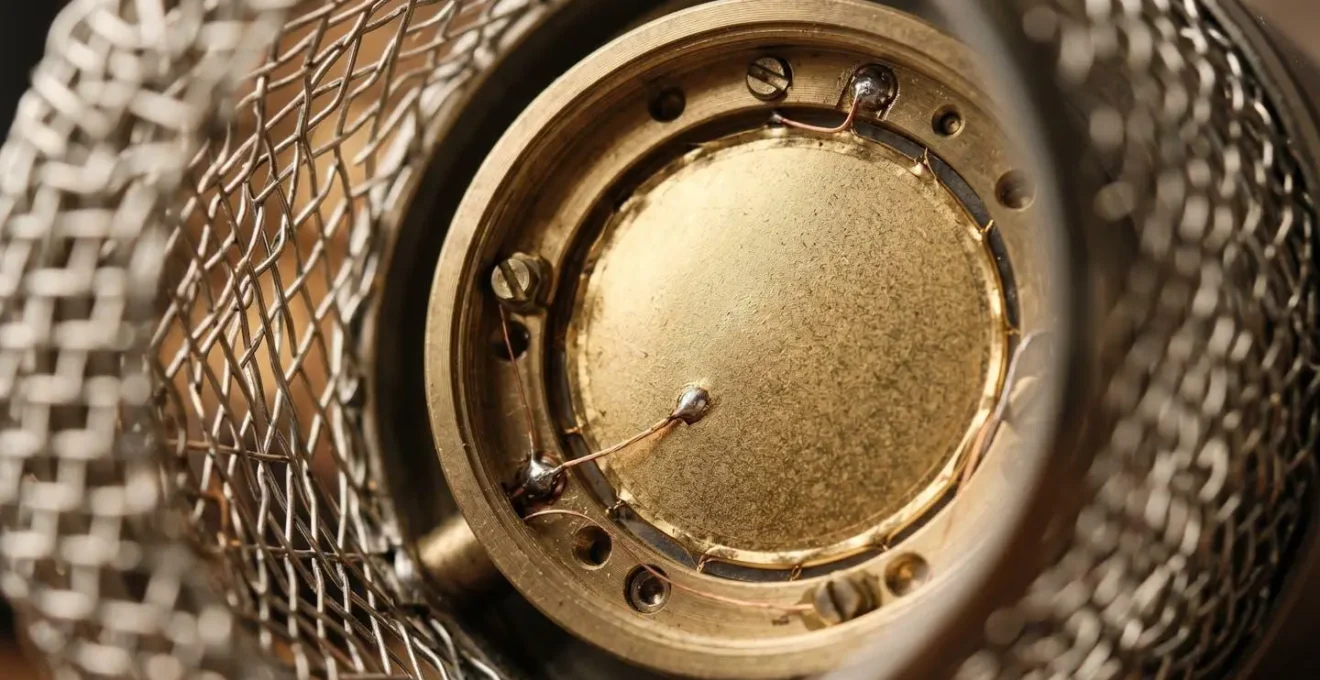
The close-up detail reveals what to look for: the integrity of the gold sputtering on the diaphragm, the tension of the membrane, and the cleanliness of the internal assembly. These micro-details are direct indicators of the microphone’s history and its future reliability—and thus, its true value as an asset.
Action Plan: Pre-Purchase Microphone Inspection
- Perform the Breath Test: Gently breathe on the capsule from a few inches away. A healthy capsule’s sound will remain stable. A deteriorating one will often cut out or distort as the moisture adds temporary mass to the diaphragm, then recover as it evaporates. This is a red flag.
- Visually Inspect the Capsule: If possible, look through the grille with a flashlight. Check the gold-sputtered membrane for discoloration, holes, or significant flaking. Some minor aging is normal, but severe deterioration is a deal-breaker.
- Check for Mismatched Serials: For microphones with external power supplies, verify that the serial numbers on both the mic body and the PSU match. A mismatch indicates components have been swapped, potentially lowering the unit’s provenance and value.
- Look for Amateur Repair Signs: Check the screws on the body and base. Stripped or incorrect screw heads are a clear sign of non-professional servicing, which can significantly damage both the electronics and the resale value.
- Verify Provenance and Packaging: Ask for original packaging, manuals, and any service history documentation. A complete set with a documented service history from a reputable technician can command a 20-30% premium on the market.
Problem & Solution: Eliminating Ground Loops in a Complex Setup
Investing in analog « Blue-Chip » assets introduces challenges that are foreign to a purely digital workflow. While you escape driver updates and software obsolescence, you enter a world of physical maintenance and electrical gremlins. One of the most common issues in a hybrid studio is the dreaded 60-cycle hum of a ground loop. This occurs when audio components are connected to different electrical outlets with slight differences in ground potential, creating a loop through the audio cables’ shields that acts like an antenna for electromagnetic interference. It’s a problem that can bring a session to a grinding halt and is a perfect example of the hidden « operating costs » of an analog-heavy setup.
The solution requires a systematic and safe approach. Never « solve » a ground loop by cutting the ground pin on a power cable. This is incredibly dangerous and creates a serious shock hazard. Instead, the goal is to ensure all interconnected equipment shares a single, common path to ground.
Solving the Hum: A Logical Workflow
- Centralize Your Power: The first and most effective step is to plug all audio equipment—interface, monitors, preamps, compressors—into a single high-quality power conditioner or strip. This forces all components to reference the same electrical ground, often eliminating the loop entirely.
- Isolate with a DI Box: If the hum persists, particularly between an unbalanced source (like a synth or guitar amp) and a balanced input on your interface, use a passive DI box with a ground lift switch. Engaging the lift disconnects the ground path through the audio cable, breaking the loop.
- Use Balanced Cables: Ensure you are using balanced TRS or XLR cables for all connections that support them. Balanced audio is designed to reject common-mode noise like hum, providing a layer of defense that unbalanced RCA or TS cables lack.
While analog gear can offer superior value retention, it is not a « plug-and-play » solution. As experts from Sweetwater note, it demands a commitment to maintenance and troubleshooting. The time and money spent on power conditioners, proper cabling, and occasional diagnostics are part of the total cost of ownership for these high-value assets.
Sequencing & Planning: A Yearly Maintenance Checklist for Vintage Gear Owners
Owning vintage audio gear is like owning a classic car; its appreciation in value is directly tied to its condition and service history. Letting a blue-chip asset sit untouched is not preservation, it’s neglect. A yearly maintenance routine is a non-negotiable strategy for value-protecting your investments. It prevents small, fixable issues from becoming catastrophic, costly failures and builds a documented history of care—provenance—that dramatically increases resale value. While tax guidelines may suggest a depreciation lifespan of 5-10 years for studio equipment, a well-maintained classic can defy this and appreciate for decades.
This checklist is not about complex repairs, but about preventative care and documentation. It’s organized into tiers based on impact to the asset’s long-term value.
- Tier 1 (Value-Protecting): These are simple actions that prevent costly oxidation and wear. Once a year, power down your gear, open it up in a clean environment, and apply a high-quality contact cleaner like DeoxIT D5 to all potentiometers, switches, and patchbay points. Clean and inspect all XLR, TRS, and tube socket connections for any signs of corrosion or looseness.
- Tier 2 (Value-Adding): These actions require professional help but add significant value. Have the tubes in your gear professionally tested and matched annually or biannually. Keep the dated report. If a technician recommends recapping, discuss using high-quality, period-appropriate components, as this can be a selling point. Avoid recapping « just because »—unnecessary work can sometimes devalue a piece for purist collectors.
- Tier 3 (Documentation): This is the easiest and often most overlooked step. After cleaning, take clear, well-lit photos of the gear’s clean internals, showcasing the original components and pristine condition. Keep every single service receipt in a binder. This binder is your proof of provenance and is a powerful negotiating tool when you decide to sell.
This disciplined, proactive approach transforms you from a mere owner into a custodian of a valuable asset. It ensures that when it’s time to liquidate or upgrade, you command the highest possible market price, realizing the full return on your initial investment and years of care.
How to Save 40% on Studio Costs by rehearsing with a Click Track?
The concept of « Return on Investment » in a studio isn’t limited to the resale value of your gear. Your single most expensive and non-renewable asset is time—especially costly studio time. Inefficiencies in the recording process burn through your budget far faster than equipment depreciation. One of the biggest drains on studio time is chasing rhythmic consistency. Endless takes to fix timing issues, laborious editing sessions, and frustrating punch-ins all stem from a lack of preparation. This is where a simple, non-tangible tool becomes one of your most powerful financial assets: the click track.
Rehearsing rigorously with a metronome before ever pressing « record » is a direct investment in efficiency. When a band or artist arrives at the studio able to perform their parts tightly to a click, the entire recording process is accelerated. Tracking is faster, the need for extensive editing is drastically reduced, and overdubbing becomes a seamless process. This preparation can lead to a massive reduction in billable studio hours. Based on professional studio workflow optimization, this can result in up to 40% in potential studio time savings.
From a portfolio perspective, this is an operational improvement that yields a direct financial return. If a day in the studio costs $500, a 40% time saving translates to a $200 gain that can be reallocated to other parts of your budget—perhaps towards acquiring another « Blue-Chip » asset. It proves that the savviest investments aren’t always physical. Investing time in pre-production discipline pays dividends that are just as real as an appreciated vintage compressor. It reinforces the core principle: your financial return is a product of your entire process, not just the gear you own.
Key Takeaways
- True studio asset value lies in a balanced portfolio, not just expensive brand names.
- Hardware’s value is in its longevity and repairability; software’s value is in its immediate utility, with zero equity.
- Diligent inspection of used gear and consistent maintenance are non-negotiable for protecting and growing your investments.
Why Your Mixes Translate Poorly Even With Expensive Monitors?
This is the final, and perhaps most tragic, investment error. A studio owner follows all the rules: they invest in a blue-chip microphone, a classic compressor, and a top-tier audio interface. They cap it all off with a pair of expensive, highly-rated studio monitors. Yet, their mixes sound fantastic in the studio but fall apart in the car, on a laptop, or on earbuds. The investment seems to have failed. The reason is a fundamental misunderstanding of the monitoring system. As repeated by countless audio professionals, it’s a stark truth.
The monitors themselves are only 50% of the monitoring system; the room is the other 50%. Investing thousands in monitors without spending a fraction on acoustic treatment is the single worst investment in studio monitoring.
– Audio Production Analysis, Professional Audio Investment Strategy
Expensive monitors in an untreated room are like a high-performance engine with no chassis. The room’s reflections, standing waves, and modal resonances create massive peaks and nulls in the frequency response at the listening position. You are not hearing the monitors; you are hearing the monitors *plus the room’s distortion*. You might compensate for a bass buildup that doesn’t exist in the mix, resulting in a thin-sounding track everywhere else. This is not just a creative problem; it’s a catastrophic financial misstep. You have invested heavily in a tool whose accuracy is completely compromised by its environment.
Case Study: The Power of a True Appreciating Asset
To understand the opposite of a poor investment, consider the Marantz 2275 receiver. This piece of 1970s hi-fi equipment, known for its build quality and warm sound, demonstrates the power of a true « Blue-Chip » asset. An analysis shows that units available for around $700 CAD just six years ago now regularly sell for $5000 CAD. This represents an over 600% appreciation in value, driven by repairability, nostalgia, and timeless performance. This is the financial potential you unlock by investing in the right physical assets, a stark contrast to spending thousands on monitors for an untreated room, which yields a negative return both financially and creatively.
The ultimate lesson is that a studio is an ecosystem. A successful investment portfolio is not about having one or two « star » pieces of gear. It’s about the synergistic and balanced function of the entire chain, from the performer to the room itself. Neglecting any part of that chain, especially the acoustics, invalidates the investment in all other parts.
Start today by evaluating your current setup not as a collection of tools, but as the financial portfolio it truly is. Identify your blue-chips, your workhorses, and your zero-equity digital assets, and create a strategic plan for your next acquisition.