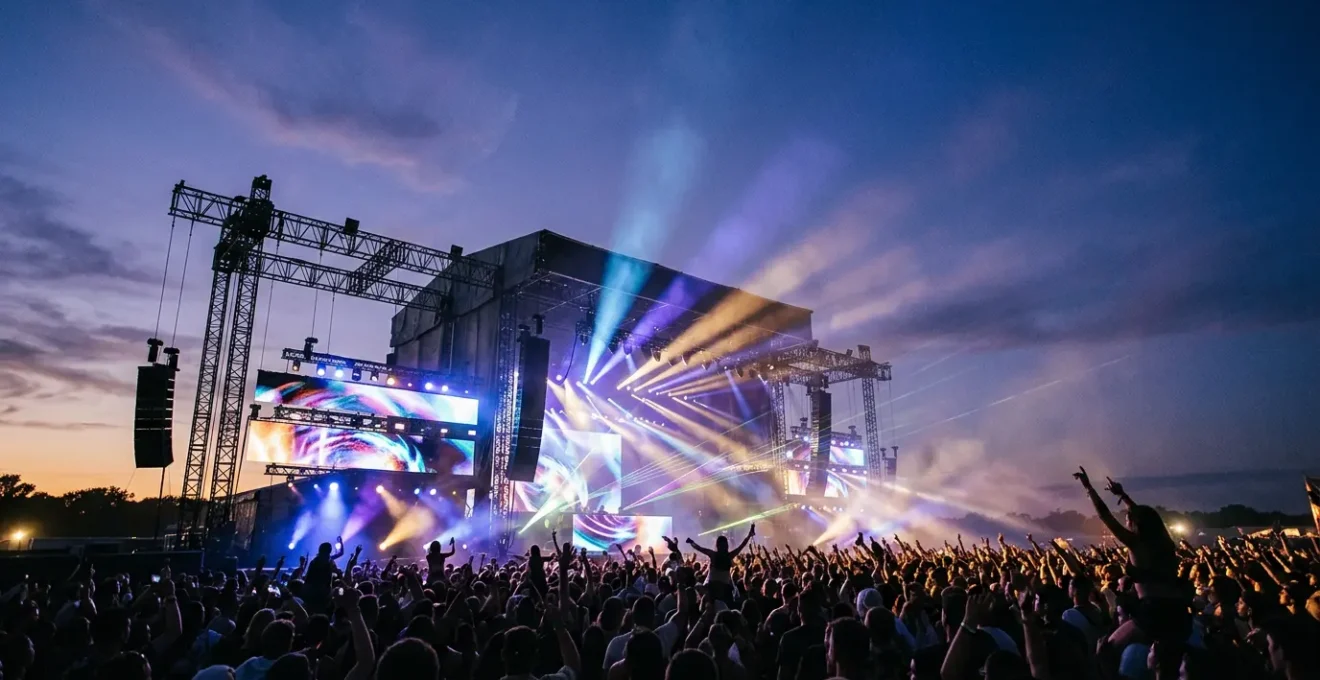
A headline performance isn’t just a bigger version of a mid-card set; it’s a fundamentally different logistical and narrative organism, engineered for mass psychological impact.
- Success is dictated by data-driven setlist curation and strategic visual architecture, not just hit songs and more lights.
- The performance is designed with military-grade planning, from system redundancy in the tech rig to contingency plans for load-out.
Recommendation: Aspiring artists should stop thinking about « getting bigger » and start analyzing their show as a system of interlocking narrative, technical, and psychological components.
The sun sets, a sea of fifty thousand faces turns to the main stage, and a roar erupts. This is the headliner’s moment. For the aspiring artist watching from the crowd, the gulf between their own mid-day set and this monumental spectacle can seem impossibly wide, often chalked up to simple factors: a bigger budget, more hit songs, a larger crew. While these elements are present, they are merely symptoms, not the cause. They are the visible outputs of a far more complex and deliberate machine operating behind the curtains.
The transition from a mid-card performer to a festival headliner is not a linear progression of scale. It is a categorical leap in strategic thinking. It’s the difference between executing a performance and directing a large-scale logistical and psychological operation. A mid-card set aims to capture energy; a headline set is designed to command it, shape it, and build a temporary world for 90 minutes. This is not about adding more lights; it’s about employing a different operational philosophy entirely.
This analysis, from the perspective of a show director, will deconstruct the core strategic pillars that define a headline-caliber performance. We will move beyond the obvious and dissect the calculus of visual design, the science of setlist construction, the psychology of mass crowd control, and the non-negotiable-level of planning that transforms a great band into a festival-conquering entity. We will explore the specific systems, strategies, and philosophies that truly separate the two tiers of performance.
This guide breaks down the essential components that constitute the headliner’s advantage. Follow along as we explore the strategic decisions that create an unforgettable main stage experience.
Summary: The Headliner’s Calculus: Deconstructing Main Stage Dominance
- Lasers or Screens: Which Visual Element Anchors a Big Stage?
- Hits or Deep Cuts: Why Headliners Rarely Play Obscure B-Sides?
- Call and Response: How to Command 50,000 People at Once?
- The Surprise Factor: Why Bringing Out Guests Is Essential for PR?
- Sequencing & Planning: The Art of the Fake Exit
- How to Use the Entire Stage to Make Your Band Look Larger?
- Sequencing & Planning: Building a Portable VJ Rig for Touring
- How to Tighten Your Live Set Transitions to Keep the Audience Hooked?
Lasers or Screens: Which Visual Element Anchors a Big Stage?
A mid-card act lights a performance. A headliner builds a visual world. This distinction is crucial and goes far beyond the simple quantity of fixtures. While the sheer scale is immense—major electronic festival stages might use over 2,000 light fixtures, including 600 moving lights—the strategic choice between primary visual anchors like LED screens and high-powered lasers dictates the entire narrative of the show. It’s not a question of which is « better, » but what story the artist needs to tell.
LED screens offer a literal narrative canvas. They are ideal for artists whose performance is tied to specific iconography, music videos, or character-driven storytelling. They allow for intricate, pre-rendered content that syncs perfectly with the music, creating a cinematic experience. This is a controlled, high-definition approach. Lasers, conversely, are about pure architectural and emotional impact. They sculpt the empty space above the crowd, creating vast, geometric cathedrals of light. Their power lies in their abstraction; they don’t tell a story, they create a feeling of awe and scale, making the physical space feel infinite.
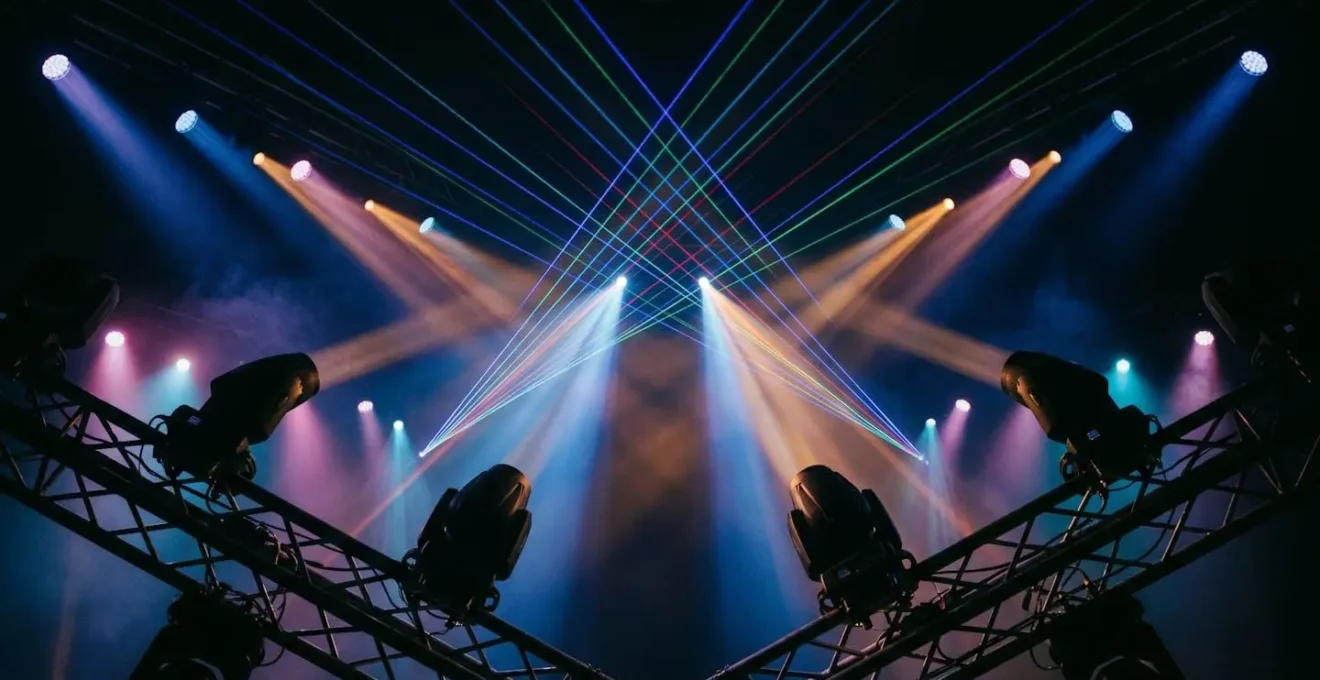
The headliner’s decision is therefore a fundamental one of narrative intent. Does the show require the detailed, content-rich environment of a screen, or the raw, spatial dominance of lasers? Often, the most sophisticated designs use a hybrid approach, using screens for intimate moments and lasers for explosive crescendos. For an artist, understanding their own narrative architecture is the first step in designing a show that justifies a main stage position.
Hits or Deep Cuts: Why Headliners Rarely Play Obscure B-Sides?
A mid-card act plays a setlist. A headliner executes a data-driven emotional arc. The casual fan might lament the lack of deep cuts in a headline set, but this isn’t a sign of creative laziness; it’s a mark of strategic professionalism. The goal is to maintain peak energy and engagement across a diverse audience of tens of thousands, many of whom are not hardcore fans. In this environment, familiarity is the currency of connection. Obscurity is a risk that a million-dollar production cannot afford.
Modern setlist design at the highest level is a science. As revealed by Daniel Ek, founder of Spotify, major artists like Metallica leverage streaming data to an extreme degree. It’s not just about playing the most popular songs overall; it’s about seeing what’s most popular in that specific city. As Ek noted, they adjust their setlist on a city-by-city basis by looking at Spotify data to see which songs are most popular there. This is hyper-localized audience catering on a massive scale.
Case Study: The « Strategic Uniqueness Score »
A data-driven analysis of live acts reveals two polar opposite, yet equally valid, headline strategies. An artist like Taylor Swift operates with a low « uniqueness score »; her Eras Tour setlist is a tightly choreographed, largely static sequence. This is a necessity of the massive production, where every lighting cue, costume change, and stage move is pre-programmed for a flawless, repeatable spectacle. On the other end, a band like Phish has an extremely high uniqueness score. Their improvisational nature means setlists vary wildly every night, with almost no repeated song sequences. A data analysis of setlist sequences shows Phish’s maximum repeated sequence is just three songs, compared to Swift’s forty. This caters to a dedicated fanbase that values spontaneity over spectacle. The choice reflects the brand: one sells a perfect film, the other a unique live document.
The headliner understands they are not playing for the ten-deep superfan in the front row; they are playing for the person 200 yards away who only knows three songs. The setlist is engineered to create the maximum number of shared moments of ecstatic recognition. It’s a calculated decision to prioritize collective euphoria over niche indulgence.
Call and Response: How to Command 50,000 People at Once?
For a mid-card act, « call and response » is a way to engage the front few rows. For a headliner, it is a tool of mass psychological command. The challenge is not merely to be heard, but to unify the actions and emotions of a temporary city. With top-tier festival attendance soaring—Live Nation alone saw 44 million fans attend its festivals in a recent year—the ability to direct this massive human energy is a defining headliner skill. This is not simple showmanship; it’s a demonstration of control and a method for building and releasing tension on a monumental scale.
The classic techniques—getting the crowd to crouch down before a drop, orchestrating a field-wide phone-light display, or leading a simple, anthemic singalong—serve a critical purpose. They transform tens of thousands of individual spectators into a single, cohesive entity. This act of unification creates a powerful feedback loop. The artist gives a command, the crowd complies, and the visual and auditory spectacle of that unified action amplifies the energy tenfold, which in turn fuels the artist’s performance. It’s a moment where everyone feels part of something bigger than themselves.
A headliner’s frontperson must possess an innate understanding of this dynamic. They need the authority to issue the command and the charisma to ensure it’s followed. They use the full breadth of the stage, direct eye contact (even if simulated via camera screens), and deliberate pacing to make the person at the very back feel seen. They are not asking for participation; they are directing it with the confidence of a conductor leading an orchestra of 50,000 members. This is the difference between inviting a response and commanding a collective experience.
The Surprise Factor: Why Bringing Out Guests Is Essential for PR?
When a headliner brings out a surprise guest, it is rarely a spontaneous act of friendship. It is a calculated, high-leverage public relations maneuver designed to maximize the return on an astronomical investment. Headline performance fees are staggering, with top-tier artists commanding well over $10 million for a two-weekend festival appearance. To justify this expense, the promoter and artist need the performance to generate buzz that extends far beyond the festival grounds. The « surprise guest » is one of the most reliable ways to guarantee that buzz.
This single moment is engineered to dominate social media feeds and news headlines the next day. It creates a unique, « you had to be there » event that generates immense FOMO (Fear Of Missing Out), which in turn drives ticket sales for future festivals and tours. It’s a manufactured media moment. The choice of guest is also strategic: it could be a legacy artist to lend credibility, a red-hot new star to show relevance, or a local hero to connect with the specific audience. Each option is weighed for its potential media impact.
This level of strategic thinking is a world away from a mid-card band inviting a friend on stage. For a headliner, the logistics are complex, involving separate contracts, security, travel, and technical rehearsals. As artist Sabrina Carpenter revealed about her own Coachella headline preparations, the process is far from casual: « Most of the time, you’re really quickly thrust into physical rehearsals, but this time around we started this process around seven months ago. » This extended timeline allows for the integration of these complex, high-impact moments that elevate a set from a great concert to a cultural event. The surprise guest is not just an addition; it is a planned, resourced, and executed part of the overall marketing strategy for the performance.
Sequencing & Planning: The Art of the Fake Exit
The « fake exit » before the encore is one of the oldest traditions in live music, but at the headline level, it transforms from a simple trope into a critical, pre-planned structural component of a massive logistical operation. For a mid-card band, the encore is a hopeful request. For a headliner, it is a contractual obligation and a scheduled part of the show’s narrative arc. The brief darkness is not a moment of uncertainty; it’s a meticulously timed buffer for costume changes, technical re-sets, or moving stage elements into position for the grand finale.
This level of planning extends to every second of the performance, especially the end. Headliners must operate within a razor-thin window defined by union rules, venue curfews, and the schedules of other festival operations. A show that runs even five minutes late can incur massive financial penalties. Therefore, the encore isn’t an afterthought; it is timed to the second. The « one more song » chants are a cherished part of the ritual, but the show’s director already has the crew on standby, ready to execute the final sequence.
This operational rigor is born from necessity. As detailed by legendary production designer Steve Lieberman, the logistical challenges vary dramatically. At a festival like EDC Las Vegas, the stages are so enormous that the setup takes two months. Conversely, for a city festival like Rolling Loud Los Angeles, the entire main stage must be designed for a complete teardown within nine hours of the show’s end to reopen city streets. This is the headliner’s reality: a world of extreme contingencies where the show’s structure, including the encore, is dictated by complex external constraints. The art of the fake exit, then, is in making a precisely scheduled event feel like a spontaneous, emotional gift to the audience.
How to Use the Entire Stage to Make Your Band Look Larger?
A festival main stage is a vast, intimidating space. For a mid-card act, it can easily swallow them, making them look small and distant. A headliner, however, treats the stage not as a platform, but as a three-dimensional volume to be conquered. They use spatial architecture to create an impression of scale and dynamism that fills the entire visual field of the audience. This is achieved through deliberate blocking, multi-level stage design, and the strategic use of lighting to define and redefine the performance area.
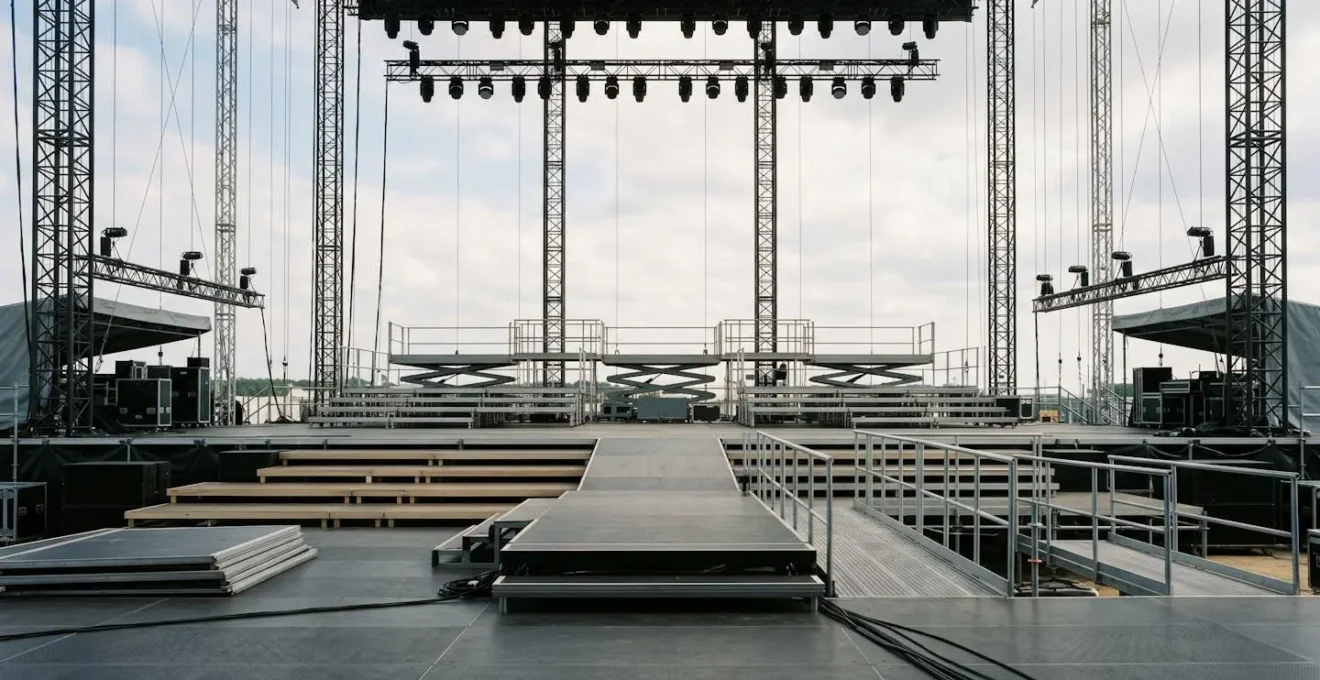
The investment in this architecture is significant. For a mid-sized festival of 20,000 attendees, the main stage production costs can range from $400,000 to $900,000, a figure that balloons for premier events. This budget allows for the construction of multi-level risers, ego-ramps extending into the crowd, and automated lifts that can raise performers or equipment. A headliner’s frontperson will not stay behind the microphone stand; they will utilize every inch of this construction, moving from a high riser at the back to the very tip of a B-stage thrust, ensuring they are constantly changing the audience’s focal point.
This dynamic movement serves two purposes. First, it makes the performers appear more energetic and commanding, creating visual interest. Second, it allows the lighting and video designers to create distinct « zones » for different moments in the show. A quiet, intimate song might be lit with a single spotlight on the edge of the stage, making the vast space disappear. An explosive anthem might utilize the full array of lights across every level, creating a visual crescendo. By actively occupying and transforming the space, the headliner ensures their performance feels as monumental as the stage it’s on. They don’t just occupy the space; they command it architecturally.
Sequencing & Planning: Building a Portable VJ Rig for Touring
While the audience sees a seamless visual spectacle, the show director sees a complex web of technology where a single point of failure could be catastrophic. For a mid-card act, a laptop crash is an embarrassing mishap. For a headliner, it’s a potential show-stopper that could derail a multi-million dollar production. This is why the concept of system redundancy is a non-negotiable principle at the highest level of touring. The VJ and media server rig is a prime example of this philosophy in action.
A headline show’s video system is not a single laptop running visuals. It’s a sophisticated, rack-mounted « logistical organism » built for absolute resilience. The standard is to have a primary playback system, a secondary system running in perfect sync to take over instantly and automatically in case of failure, and often a tertiary « panic » system that can play out simple logos or ambient content if both main systems fail. Every component, from power supplies to video output cards to network cables, is duplicated. This is the difference between hoping for the best and planning for the worst.
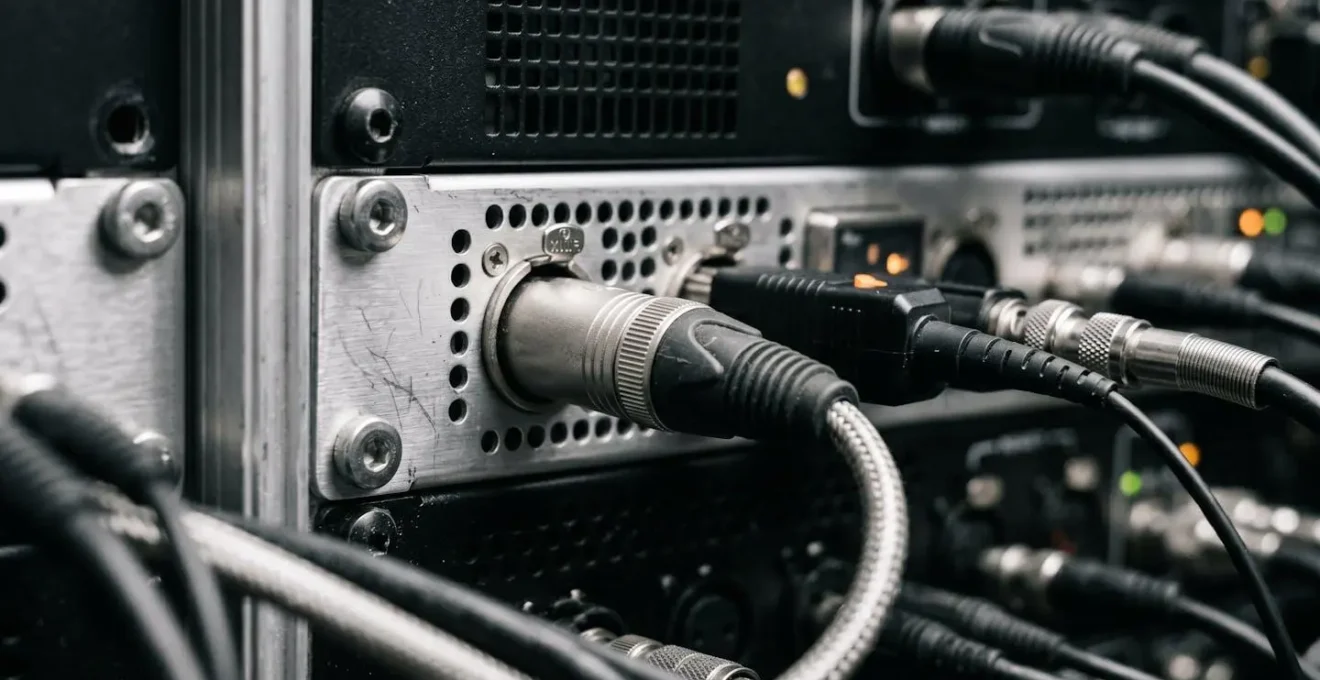
This level of preparation is essential given the scale of the visual elements being driven. A single main stage might feature 1,600 individual two-by-two-foot video tiles, all requiring flawless content delivery. As legendary designer Steve Lieberman states, this is the result of immense forward planning: « We design and document the stages we work on months in advance. We’ve already started work on shows that are six months from now. » This long-term design process allows for the creation of these robust, redundant systems. Building a portable rig is not just about choosing powerful hardware; it’s about architecting a system that is, by design, incapable of catastrophic failure.
Key Takeaways
- A headline set is a system, not a show. Success depends on treating it as a « logistical organism » with interlocking visual, sonic, and psychological parts.
- Data is king. Setlists are not based on whims but on granular analysis of streaming data to maximize audience engagement in each specific location.
- Redundancy is professionalism. The difference between a mid-card and headline-level tech rig is the assumption of failure and the implementation of multiple backup systems.
How to Tighten Your Live Set Transitions to Keep the Audience Hooked?
For a mid-card act, the space between songs is dead air: a moment for tuning, drinking water, or awkward stage banter. For a headliner, these transitions are the connective tissue of the entire performance. They are as meticulously planned and rehearsed as the songs themselves. The goal is to maintain absolute control over the show’s momentum and to never give the audience’s attention a moment to drift. A silent, dark stage is an opportunity for a member of the crowd to check their phone, talk to their friend, or decide to go get a beer. This is a cardinal sin in the headliner’s calculus.
Transitions are managed through a variety of techniques. They can be musical, with instrumental interludes, ambient soundscapes, or drum solos bridging the gap between two songs of different tempos or keys. They can be visual, using pre-rendered video content on the screens to cover a complex set change happening on a darkened stage. Or they can be narrative, with the frontperson using a short, rehearsed monologue to set the emotional tone for the next piece. Often, it’s a combination of all three, creating a seamless, cinematic flow that feels more like a continuous film than a series of individual songs.
This level of planning is also a response to the harsh realities of the festival environment. As production designer Steve Lieberman points out, you’re not just fighting for attention, you’re fighting the elements: « A big thing at festivals like EDC Las Vegas is that it’s typically 100-plus degrees outside every single day… you have to plan accordingly. » Heat, exhaustion, and a thousand other distractions are vying for the audience’s focus. Seamless transitions are a weapon against this entropy, keeping the crowd locked into the world the artist has built. Tightening a set means eliminating every single moment where the illusion might break.
Action Plan: Auditing Your Set’s « Headline Potential »
- Map Your Momentum: Chart your setlist’s emotional arc. Identify the peaks, valleys, and, most importantly, the dead air between songs. Time these gaps. Anything over 15 seconds is a problem to be solved.
- Inventory Transitions: For each gap, inventory what’s happening. Is it silent tuning? Is it unplanned banter? Brainstorm a specific musical or sonic element (a synth pad, a drum loop, a guitar feedback swell) that can fill that space and connect to the next song.
- Analyze Spatial Usage: Film your rehearsal. Are all band members static? Design one specific moment where the vocalist or guitarist moves to a different part of the stage (even if it’s just a few feet) to change the visual focal point.
- Identify Your « Call » Moment: Design one single, simple, and unambiguous moment of crowd interaction. It could be a specific singalong part or a clap-along. Rehearse how you will initiate it with clear, commanding language.
- Simulate a Failure: During rehearsal, have someone unexpectedly unplug a key piece of gear (like a vocal mic or a keyboard). Practice how the band will musically cover that moment without stopping the show. This builds resilience.
Ultimately, ascending to headliner status requires a paradigm shift. It demands that an artist evolves from a performer into a director. It’s about taking ownership of every single element—from the data-driven setlist to the redundant VJ rig to the psychologically-tuned encore—and orchestrating them into a singular, overwhelming, and unforgettable experience. The next step for any aspiring artist isn’t just to write more hits or play more shows; it is to begin analyzing their performance through this strategic lens and start building their own logistical organism, piece by deliberate piece.