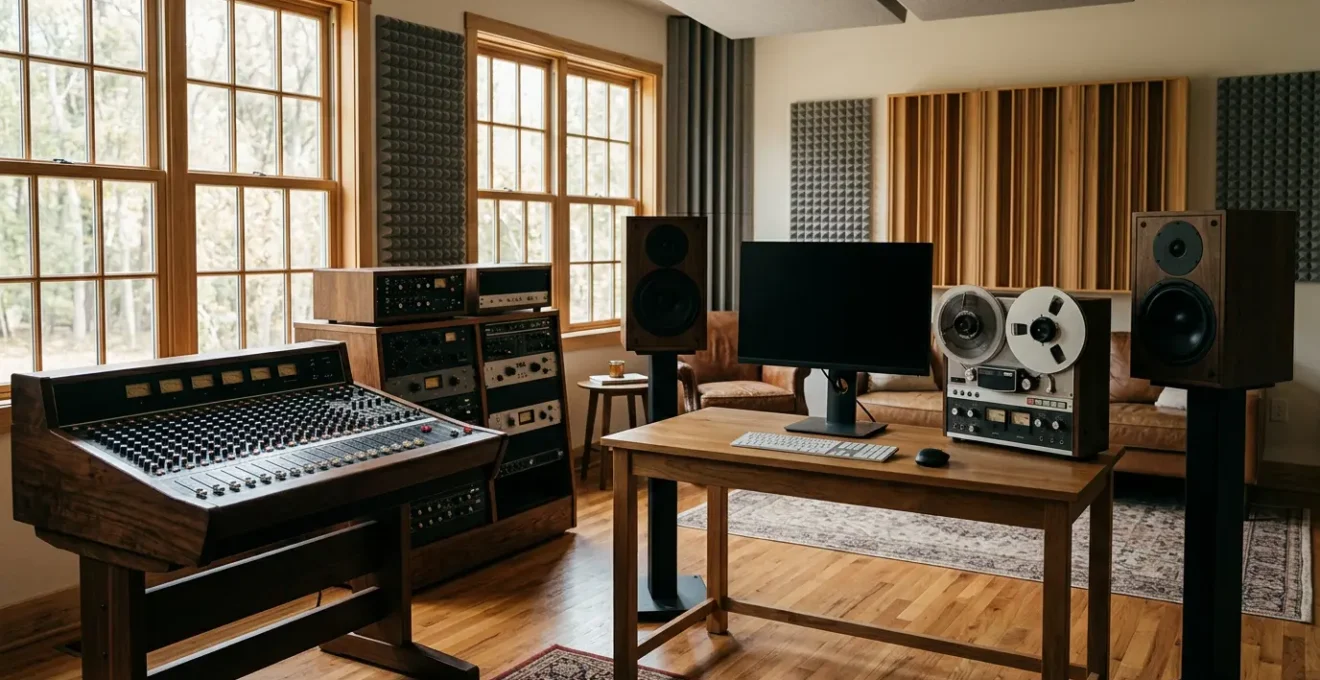
The choice isn’t between an LP or singles; it’s about strategically allocating your finite budget to build a high-value fanbase.
- Pre-production is the #1 cost-saver, with disciplined rehearsal on a click track potentially cutting studio time by over 40%.
- A successful release requires a 3-6 month marketing runway and a post-production budget that ringfences funds for mixing, mastering, and promotional assets.
Recommendation: Focus on building a direct-to-fan ‘Inner Circle’ via a dedicated channel like email, as it offers the highest engagement and long-term career value, regardless of release format.
The debate between releasing a full-length album (LP) and focusing on a steady stream of singles is a constant source of anxiety for emerging artists. Conventional wisdom, shaped by the streaming economy, relentlessly champions the single. We’re told that attention spans are short, that Spotify’s algorithm rewards frequency, and that the album is a relic of a bygone era. This narrative frames the choice as a simple binary: embrace the modern, algorithm-friendly single, or cling to the outdated, financially risky album format. But this perspective misses the strategic core of the issue.
The real question is not « LP or single? » but rather, « What is the most effective way to allocate my finite resources—time, money, and creative energy—to achieve a specific goal? » For a career artist, that goal isn’t just accumulating streams; it’s about converting passive listeners into a dedicated, high-engagement fanbase. This is a game of resource management, not format dogma. Viewing your release strategy through this lens transforms the decision from an artistic dilemma into a calculated business plan. Whether you choose a waterfall of singles or a cohesive album, every choice—from pre-production to mastering—becomes a deliberate investment toward building a sustainable career.
This guide deconstructs the financial and strategic realities behind both approaches. We will move beyond the surface-level debate to provide a data-driven framework for making the right decision for your project. By analyzing studio costs, production choices, budgeting pitfalls, and promotional timelines, you will learn to build a release strategy that maximizes your impact and builds a loyal audience that will support you for years to come.
Summary: LP vs EP: A Data-Driven Guide to Building a Fanbase in the Streaming Era
- Why Making a Concept Album Might Be Career Suicide for New Artists?
- How to Save 40% on Studio Costs by rehearsing with a Click Track?
- Self-Produced vs Professional Producer: Which Is Right for Your Sound?
- The Mixing Budget Mistake That Leaves No Money for Mastering
- Sequencing & Planning: The 6-Week Timeline for a Successful Album Drop
- How to Split a $5000 Studio Budget for Maximum Quality?
- How to Build an Email List That Has a 50% Open Rate?
- What Structural Secret Do 80% of Top 40 Hits Share?
Why Making a Concept Album Might Be Career Suicide for New Artists?
For an emerging artist, embarking on a concept album can feel like the ultimate artistic statement. It promises a deep, immersive world for listeners, a cohesive narrative that stands apart from the fleeting nature of individual singles. However, from a strategic standpoint, it represents a high-risk, high-reward gamble that often backfires. The primary risk is audience alienation. A dense, thematically-linked project demands significant listener investment, a commitment that casual Spotify browsers are rarely willing to make for an unknown act. If the concept doesn’t land, the entire project can fall flat, consuming a massive budget with little return.
The financial drain is the second major deterrent. Concept albums often require more intricate production, extended studio time, and complex arrangements to bring the narrative to life, stretching already thin budgets. Yet, the potential reward—a deeply dedicated cult following—is a powerful lure. As M. Merlini notes in « The Second Death of Concept Albums, » we may be in a « potential second golden age of concept albums, » where streaming platforms paradoxically enable binge-listening of narrative works. The key is execution.
Case Study: Kendrick Lamar’s ‘To Pimp a Butterfly’
Kendrick Lamar’s 2015 masterpiece is a modern benchmark for concept album success in the streaming era. The album’s intricate narrative exploring race, fame, and self-worth demanded full, sequential listens. Instead of alienating audiences, its artistic vision and cohesive storytelling created a cultural event, fostering a dedicated following that engaged with the work on a much deeper level than a playlist of singles ever could. It proves that when a concept is executed with genius-level vision, it can still transcend the single-driven market and build an enduring legacy.
Ultimately, for a new artist, a concept album is a bet on your own brilliance. Unless you have an undeniable, fully-realized vision and the resources to execute it flawlessly, your budget and promotional energy are better spent on building an initial audience with more accessible, individual tracks. The grand narrative can wait until you have an audience eager to listen.
How to Save 40% on Studio Costs by rehearsing with a Click Track?
The single largest and most unpredictable expense in any artist’s budget is studio time. Wasted hours spent figuring out arrangements, fixing tempo issues, or re-tracking sloppy performances can cripple a project before it even reaches the mixing stage. The most effective way to combat this is through rigorous, disciplined pre-production, and the click track is your most powerful weapon. Rehearsing every song to a metronome until the entire band can play it tightly and consistently in their sleep is not about sacrificing « feel »; it’s about achieving professional execution that saves you a fortune.
When you enter the studio thoroughly prepared, you are no longer using expensive time for rehearsal. Instead, you’re capturing polished performances. This shifts the function of the studio from a creative incubator to an efficient capture facility. Consider that professional studios typically charge between $30 and $300 per hour. Cutting down a 10-hour tracking day to 6 hours through sheer preparedness represents a direct saving of 40%. For a full album project, these savings can amount to thousands of dollars—money that can be reallocated to better mixing, mastering, or marketing.
The process of rehearsing with a click track also forces you to finalize song structure and tempo decisions before the clock is running. This discipline eliminates costly debates and experimentation in the studio. You arrive with a clear roadmap for each track, allowing the engineer to focus on capturing the best possible sound. This level of preparation is the defining characteristic of professional musicians and is the most impactful step you can take to maximize your studio budget.
Self-Produced vs Professional Producer: Which Is Right for Your Sound?
The decision to self-produce or hire a professional is one of the most critical forks in the road for any artist. This choice defines not only your budget but the very sonic identity of your project. Self-production offers the allure of complete creative control and significantly lower upfront costs. It’s an excellent path for artists who have a strong technical skillset and a crystal-clear vision for their sound. However, this path is fraught with pitfalls, including the lack of an objective ear, potential technical shortcomings, and the immense time commitment required to manage the entire project.
A professional producer, on the other hand, is a strategic investment. They bring not just technical expertise but an unbiased, market-aware perspective. A great producer can elevate arrangements, push an artist to deliver a better performance, and shape a collection of songs into a cohesive, competitive record. Furthermore, their industry connections can open doors to session musicians, mixing engineers, and even label contacts. The primary drawback is cost, which can range from a few thousand dollars to tens of thousands for an established name.
The following table breaks down the strategic considerations, helping you align your choice with your budget and career goals.
| Production Approach | Typical Cost Range | Key Advantages | Best Suited For |
|---|---|---|---|
| DIY/Self-Produced | $2,000-$5,000 per album | Full creative control, lower upfront costs, flexible timeline | Artists with production skills, demo projects, budget-conscious releases |
| Hybrid Model (80% self + specialist finisher) | $5,000-$15,000 per album | Balanced cost/quality, objective ear on crucial elements, professional polish | Independent artists with some production experience seeking radio-ready quality |
| Full Professional Producer | $10,000-$100,000+ per album | Industry connections, expert arrangement, proven track record, mentorship | Established acts, label-backed projects, artists seeking major commercial impact |
To make the right decision, you must conduct an honest self-assessment. Answering the following questions will clarify whether you truly possess the skills to go it alone or if an external producer would be a wise investment:
- Project Management: Can you coordinate timelines, budgets, and collaborators effectively without external guidance?
- Arrangement Skills: Do you have a clear vision for instrumentation, song structure, and sonic direction for each track?
- Objectivity: Can you critically evaluate your own work and make tough decisions, or do you need an unbiased perspective to identify weak elements?
- Technical Proficiency: Do your mixing, recording, and sound design skills meet a professional standard?
- Networking Needs: Would a producer’s industry connections to labels or playlist curators accelerate your career goals?
The Mixing Budget Mistake That Leaves No Money for Mastering
One of the most common and catastrophic budgeting errors independent artists make is viewing post-production as a single expense. They allocate a lump sum for « finishing the record, » only to burn through it all during the mixing phase, leaving nothing for professional mastering. This forces them into a corner: either release an unmastered record (a fatal flaw in the competitive streaming market) or use a cheap, automated online service that can’t compete with the nuance of a human engineer. This mistake fundamentally misunderstands the distinct and crucial roles of mixing and mastering.
Mixing is the creative process of balancing individual tracks, applying effects, and shaping the emotional and sonic landscape of a song. Mastering is the final technical quality control step. It ensures the album is competitively loud, sonically cohesive from track to track, and optimized for all playback formats, from vinyl to Spotify. According to current industry rates, mixing typically costs $200-$900 per song, while mastering is a separate charge, often $50-$150 per track. Failing to budget for them as two distinct line items is a recipe for disaster.
To avoid this, savvy artists use a clear allocation framework for their post-production budget. The 70/20/10 Rule is a reliable model:
- Allocate 70% of the post-production budget to mixing. This is the most creative and time-consuming stage, and it’s where your song’s character is defined. Skimping here is not an option.
- Reserve 20% for professional mastering. This is a non-negotiable cost. Think of it as insurance for your entire investment, ensuring your music stands up against major label releases.
- Protect 10% as a contingency for alternate versions and assets. This fund covers instrumentals, a cappellas, clean edits, and performance mixes. These assets are essential for sync licensing opportunities, collaborations, and promotion, and creating them later is always more expensive.
By ringfencing these funds from the start, you ensure every stage of post-production is properly resourced, leading to a professional-sounding final product ready for the market.
Sequencing & Planning: The 6-Week Timeline for a Successful Album Drop
A successful release is not an event; it’s a meticulously planned campaign. The idea of dropping an album with only a few weeks of promotion is a fantasy reserved for superstar artists. For an emerging act, the « album drop » is the culmination of a months-long strategic « asset waterfall. » While the final, most intense promotional push may happen in the 6-8 weeks leading up to release day, the groundwork must begin far earlier. In fact, most music marketing experts recommend starting your album campaign 3-6 months before release.
This extended timeline serves several strategic purposes. First, it allows for a « waterfall » release of singles. Dropping 2-3 singles in the months leading up to the full album release builds anticipation, feeds streaming platform algorithms with consistent activity, and gives music journalists and playlist curators multiple opportunities to discover your work. Each single is a new marketing beat, complete with its own artwork, social media content, and potential for press coverage. This creates a sustained narrative around your project rather than a single, easily missed promotional spike.
Second, this runway is crucial for logistics. It provides the necessary lead time for digital distribution services (typically 4-6 weeks to guarantee placement on all platforms), pitching to official Spotify and Apple Music playlists (which must be done weeks in advance), and coordinating any PR or marketing efforts. Rushing this process means missing out on the most powerful promotional tools available to independent artists. A 6-week timeline isn’t the whole plan; it’s just the final, frantic sprint. The real work of a successful launch is a marathon that starts months before.
How to Split a $5000 Studio Budget for Maximum Quality?
A $5,000 budget for a full-length album is tight, but with strategic allocation, it’s entirely feasible to produce a professional-quality record. The key is to stop thinking in terms of equal distribution and start thinking in terms of project-specific priorities. The ideal budget split for a beat-heavy hip-hop album is drastically different from that of an organic, live-tracked folk record. Your genre and production style must dictate where you invest the most money.
For example, a hip-hop artist might allocate a significant portion of their budget to high-quality beat production and a detailed, bass-heavy mix, while spending less on studio time since vocals are the primary live element. Conversely, a folk act will invest heavily in studio time to capture the magic of a live band, but may spend less on post-production sound design. The following table illustrates three genre-specific scenarios for a $5,000, 10-track album budget, demonstrating how to prioritize spending for maximum sonic impact.
| Budget Category | Hip-Hop Album (Beat-Heavy) | Folk Album (Live Tracking) | Electronic Album (Sound Design) |
|---|---|---|---|
| Recording/Studio Time | $800 (16 hours @ $50/hr for vocals/overdubs) | $2,000 (40 hours @ $50/hr for live instruments) | $500 (10 hours @ $50/hr for vocal tracking only) |
| Production/Beats/Composition | $1,500 (beat production, sample clearance) | $300 (minimal arrangement assistance) | $1,800 (advanced sound design, synthesis) |
| Mixing (10 tracks) | $1,500 ($150/track, beat-focused mix) | $1,200 ($120/track, organic mix) | $1,400 ($140/track, detailed automation) |
| Mastering (album) | $500 (full album master) | $600 (stem mastering for dynamic range) | $600 (loudness optimization) |
| Session Musicians | $200 (live bassist for 2 tracks) | $700 (drummer for full album) | $200 (live guitarist for texture) |
| Contingency/Alternates | $500 (instrumentals, clean versions) | $700 (alternate mixes, vinyl master) | $500 (remix stems, radio edits) |
This data-driven approach demystifies the process. It’s about making smart, informed trade-offs. As Steve Foggin of 31st Street Studios points out, technology has made professional results more accessible than ever.
In the world we live in today, you can make $2,000 go a long way — much farther than previously. Back in the day, it would cost you $2,000 just for recording quality tapes to get you in the front door.
– Steve Foggin, 31st Street Studios, Recording Connection
By identifying your project’s core sonic needs and allocating your funds accordingly—always reserving a contingency—you can turn a modest $5,000 into a powerful and competitive musical statement.
Key Takeaways
- The LP vs. single debate is a trap; the real focus should be on strategic resource allocation to build a loyal fanbase.
- Rigorous pre-production, especially rehearsing to a click track, is the single most effective way to reduce studio costs and maximize your budget.
- A successful release is a long-term campaign (3-6 months), not a short-term event, requiring a « waterfall » of content to build momentum.
How to Build an Email List That Has a 50% Open Rate?
In an era of fleeting social media engagement and fickle algorithms, an email list is the single most valuable asset an artist can own. It is a direct, unfiltered line of communication to your most dedicated fans—your ‘Inner Circle.’ While a 50% open rate sounds impossibly high compared to the industry average of 21%, it is achievable by shifting your mindset from promotion to exclusivity. Your email list should not be a megaphone for shouting « new song out now! »; it should be a private club that offers genuine, unique value that fans cannot get anywhere else.
The core principle is to treat your subscribers like true insiders, not just consumers. This involves a content strategy centered on « process-over-product. » Instead of just announcing finished work, you share the journey: demo snippets, the story behind a lyric, behind-the-scenes photos from the studio, or early access to tickets. This narrative-driven approach builds a deep, personal connection and fosters intense loyalty. High open rates are a natural byproduct of providing content that your fans genuinely look forward to receiving.
Furthermore, maintaining a high-quality list requires active management. This includes implementing a « sunset policy » to periodically remove inactive subscribers who bring down your engagement metrics. Hyper-segmentation, such as tagging fans by location for tour announcements or by engagement level, allows for highly personalized communication that feels relevant and valuable. Achieving a 50% open rate is less about marketing tricks and more about cultivating a genuine community.
Action Plan: The ‘Inner Circle’ Framework
- Frame Exclusivity: Position your list as an ‘Inner Circle’ offering content never shared on social media (voice notes, demo snippets, early ticket access).
- Adopt ‘Process-Over-Product’ Content: Shift from promotional emails to narrative messages like ‘The story behind this lyric’ or ‘How I created this album artwork.’
- Implement a ‘Sunset Policy’: Create re-engagement campaigns for inactive subscribers (60-90 days), then remove cold contacts to maintain list health.
- Deploy Hyper-Segmentation: Use tags for location (geo-targeted tour announcements), purchase history (merch promotions), and engagement level (super fans vs. casual listeners).
- Personalize Communication: Include subscriber names in greetings and subject lines, and reference their known preferences to increase relevance and click-through rates.
What Structural Secret Do 80% of Top 40 Hits Share?
The idea that a single « secret » unlocks a Top 40 hit is a myth. However, analyzing decades of chart-topping songs reveals a powerful, shared structural principle: immediacy and repetition. In the streaming economy, where listeners can skip a song within seconds, the leisurely intros and long-winded verses of the past are gone. The modern hit gets to the point—fast. This typically means a song structure that introduces the main hook or chorus within the first 30 seconds, often preceded by a short intro or a single verse. The goal is to eliminate any friction between the listener and the song’s most memorable element.
This structure is reinforced by the economic reality of streaming. The music industry’s business model is no longer built solely on album sales. Today, it’s a game of consumption volume, where 1,500 song streams are considered equivalent to one album sale by platforms like Billboard. This system inherently rewards songs that are highly replayable. Structures with shorter verses, powerful pre-choruses that build tension, and massive, repetitive choruses are engineered for this purpose. The « secret » isn’t a magical chord progression; it’s a ruthless optimization for attention capture and retention in a saturated market.
For an emerging artist, this doesn’t mean you must abandon artistic integrity for a formula. It means you must be a strategic songwriter. Understand that your song’s first 30 seconds are the most valuable real estate you have. Are you using them effectively? Is your chorus—the part you want everyone to sing back to you—appearing early and often? Whether you are releasing a series of singles or a full album, applying these principles of immediacy and memorable repetition to your songwriting is a strategic decision that dramatically increases your chances of cutting through the noise and connecting with a wider audience.
Ultimately, the LP versus single debate is a distraction from the real work. The path to building a sustainable career lies in a holistic, data-informed strategy. By mastering your pre-production, allocating your budget with precision, planning a long-term marketing campaign, and focusing on building a genuine ‘Inner Circle’ of fans, you create a foundation for success regardless of format. It’s time to stop debating the container and start perfecting the contents—and the strategy used to deliver them.