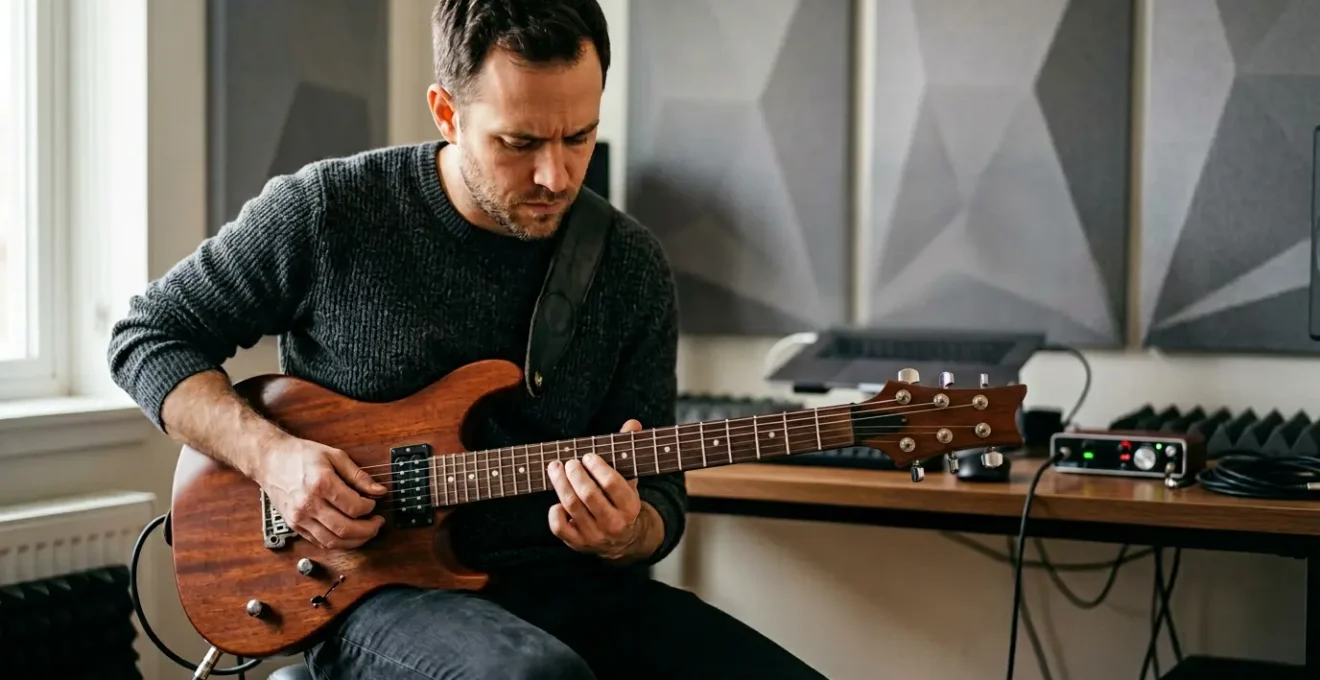
The key to landing remote session gigs without a portfolio is shifting your focus from past work to present, undeniable professionalism.
- Producers prioritize reliability and ease of workflow over an extensive, unfocused catalog of past projects.
- Your ability to deliver perfectly prepared files, communicate clearly, and serve the song is your most powerful asset.
Recommendation: Master the art of technical preparation and professional conduct. This becomes your living portfolio, proving your value on every interaction, starting today.
The ultimate paradox for any skilled instrumentalist is needing a portfolio to get work, but needing work to build a portfolio. You have the chops, the gear, and the passion, but every online platform and producer seems to ask for the one thing you don’t have: a long list of credits. The common advice— »network on social media, » « just play a lot »—feels hollow when you’re trying to break into the professional, remote session world. It’s a frustrating cycle that keeps talented musicians stuck in their bedrooms instead of on the virtual session floor.
But what if the entire premise is flawed? What if producers, deep down, aren’t just looking for a great player, but for a reliable problem-solver? The secret to getting hired isn’t about faking a resume; it’s about demonstrating your value in ways that have nothing to do with a SoundCloud playlist. It’s about proving you can make a producer’s life easier through impeccable professionalism, technical precision, and a service-oriented mindset. A flawless file delivery is more impressive than a flashy but irrelevant solo.
This guide bypasses the generic advice. We will break down the actionable strategies that prove your worth before you’ve even played a note. From the way you prepare your files to how you price your services and manage your gear, you will learn to build a reputation for rock-solid reliability—the one currency that matters more than any portfolio.
This article will guide you through the essential mindset shifts and practical skills needed to establish yourself as a go-to professional. The following sections provide a clear roadmap to becoming the kind of session musician producers are eager to hire, and more importantly, re-hire.
Summary: How to Get Hired as a Remote Session Musician Without a Big Portfolio?
- Why Being a Genre Specialist Might Limit Your Session Income?
- How to Prep Your Stems So Producers Will Hire You Again?
- Union Rates or Flat Fee: Which Should You Charge for Indie Projects?
- The Ego Mistake That Gets Session Players Fired on the Spot
- Problem & Solution: Achieving Pro Quality in an Untreated Bedroom
- How to Split a $5000 Studio Budget for Maximum Quality?
- The Naming Mistake That Makes Archiving Projects a Nightmare
- Which Professional Audio Gear Actually Retains Its Resale Value?
Why Being a Genre Specialist Might Limit Your Session Income?
The conventional wisdom often tells musicians to « find their niche. » While developing a deep expertise in one genre can establish you as a go-to authority, it can also become a financial bottleneck in the diverse world of session work. Producers are often looking for versatile players who can adapt to the specific needs of a song, which may blend multiple styles. Being a one-trick pony, no matter how good the trick, automatically disqualifies you from a vast number of potential gigs. The goal is to be a reliable musical problem-solver, not just a genre purist.
Financial reality supports this broader approach. The modern musician’s career is rarely built on a single pillar of income. In fact, a recent report showed that full-time musicians averaged 4 income streams in 2024, highlighting the importance of diversification. By being proficient in several complementary genres—for example, rock, pop, and country, or funk, soul, and R&B—you exponentially increase the pool of artists and producers who might need your skills. This doesn’t mean you have to be a master of everything, but having a working knowledge and a feel for several key markets is a powerful business advantage.
The key is to honestly assess your strengths and market them effectively. As the editorial team at Sonicbids advises, this is a strategic choice:
If you enjoy working in different genres and styles, and have high-quality examples to back it up, then going general may be a good idea.
– Sonicbids Editorial Team, How to Become a Working Online Session Musician
Without a large portfolio, your « high-quality examples » can be small, targeted demos you create specifically for outreach. Create three short, 30-second clips showcasing your feel in three different, high-demand genres. This demonstrates versatility and professionalism far more effectively than one long, single-genre epic.
How to Prep Your Stems So Producers Will Hire You Again?
This is where you can outshine a seasoned pro with a messy workflow. A producer’s biggest headache is receiving a folder of poorly labeled, unsynced, and poorly edited audio files. It wastes their time and kills their creative momentum. Delivering clean, organized, and clearly labeled stems is the single most powerful way to prove your professionalism without a portfolio. It’s a non-musical skill that screams « I respect your time and process. » It tells them you are a professional who understands the producer’s workflow, not just an amateur who can play an instrument.
The process is simple but must be flawless. Every file should be bounced from the start of the session (bar 1, beat 1) to ensure it lines up perfectly in their Digital Audio Workstation (DAW). Remove all unnecessary processing unless specifically requested—send the dry Direct Input (DI) signal alongside any amped or effected versions. Finally, consolidate your files into a logical folder structure and use a consistent naming convention. This level of detail shows you are thinking like a collaborator, not just a hired hand. The image below illustrates the kind of clarity and order that instantly builds trust.
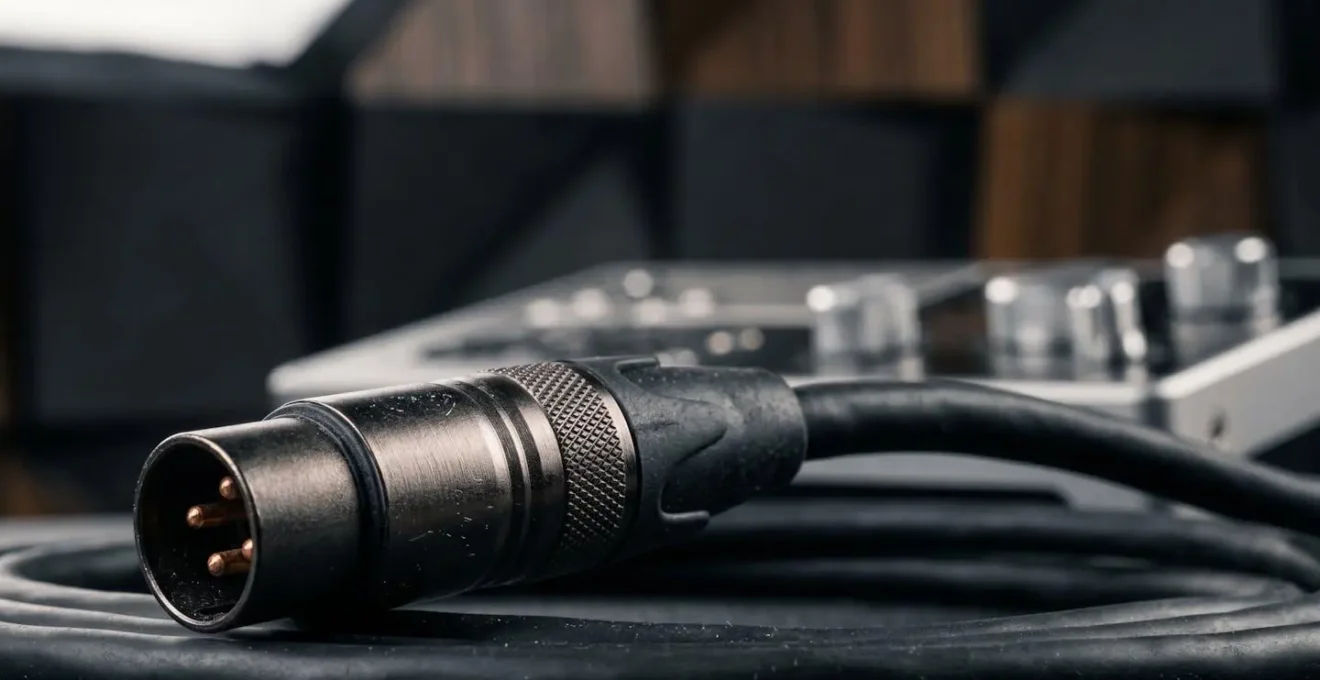
As you can see, precision matters. This isn’t just about being tidy; it’s about eliminating any guesswork for the producer. A professional file naming system is your calling card. It should be so clear that someone who has never seen the project before can understand every file’s role at a glance. Mastering this one skill can be the deciding factor between a one-off gig and becoming a producer’s first call.
Action Plan: Your Professional File Delivery Checklist
- Naming Convention: Use snake_case (e.g., `song_name_gtr_solo_take_01.wav`). It’s universally readable and prevents file system errors. Keep filenames under 60 characters to avoid being cut off in a DAW mixer.
- Content Hierarchy: Start with the most important information. The standard is Instrument > Part > Take (e.g., `bass_verse_01.wav`). This allows for easy alphabetical sorting.
- Folder Structure: Create a clean root folder (e.g., `Project_Name_Your_Name`) and inside, organize files into subfolders like `01_Audio_Stems` and `02_DI_Tracks`.
- Technical Specs: Always confirm the required sample rate and bit depth with the producer before you even record. Deliver files in the requested format (usually WAV).
- Final Audit: Before sending, import your own bounced files into a blank session. Do they all line up? Are there any clicks, pops, or unwanted noises? Do a final check to ensure you’ve delivered exactly what was asked for.
Union Rates or Flat Fee: Which Should You Charge for Indie Projects?
Navigating pricing is one of the biggest hurdles for emerging session musicians. Should you look up union rates, or just quote a flat fee? For independent projects, which will be the bread and butter of your early career, the answer is almost always a flat fee per song or per project. Union rates, such as the £180-£250 per session guideline from the UK’s Musicians’ Union for live work, are excellent benchmarks to understand your market value, but they are often designed for major label projects or specific collective bargaining agreements. Applying them rigidly to an indie artist with a small budget can price you out of a gig immediately.
A flat fee offers clarity and simplicity for both you and the client. It removes the stress of clock-watching and allows you to focus on delivering the best possible performance. When determining your flat fee, consider three factors: the complexity of the part, the number of tracks you need to record, and the client’s budget (be realistic). For example, a simple 3-track rhythm guitar part for a verse-chorus song might be $150, while a multi-layered arrangement with a complex solo could be $350 or more. The key is to agree on the scope and the price *before* you record a single note.
To truly stand out, however, you should start thinking beyond time and complexity and move towards a value-based approach. This reframes the entire conversation from your effort to the project’s success.
Case Study: Implementing Value-Based Pricing
Instead of just calculating hours, a value-based model considers the benefit your contribution provides. As an analysis on freelance business practices highlights, this is a powerful shift. For instance, if you’re asked to compose and record a signature guitar hook for a company’s commercial, your work has significant marketing value that extends far beyond your recording time. In this scenario, charging a premium flat fee of $1,000 isn’t based on working 5 hours at $200/hour; it’s based on providing an asset that could define the client’s brand. This approach, detailed in an article on the business side of freelancing, allows you to justify higher rates by tying your fee to the impact you deliver, making your service an investment rather than an expense for the client.
This mindset demonstrates a higher level of business acumen, positioning you as a strategic partner. It shows you understand that your role contributes to a larger commercial or artistic goal, a perspective that is highly valued by serious producers and clients.
The Ego Mistake That Gets Session Players Fired on the Spot
More than a wrong note or a missed deadline, the fastest way to get blacklisted as a session musician is to let your ego drive your decisions. You might be a phenomenal player, but in a session context, your primary job is not to be a star; it’s to serve the song and the producer’s vision. This is a fundamental misunderstanding that derails many talented musicians. As the team at Last Minute Musicians puts it succinctly:
Session work is about providing a service. Provide the right service and you’re well on the way to a successful career.
– Last Minute Musicians Editorial Team, How to Work as a Session Musician: A Complete Guide
This service-oriented mindset is your greatest asset. It means listening more than you play, taking direction gracefully (even if you disagree with it), and offering solutions, not problems. The ego-driven player hears « Can you try something simpler? » as a personal insult. The professional player hears it as a new parameter for the problem they’ve been hired to solve. They respond with, « Absolutely. How about something like this? » This attitude of collaborative and coachable professionalism is what producers remember.
The most common ego mistake is « overplaying. » A producer sends you a track needing a simple, supportive bassline, and you send back a flurry of virtuosic slapping and popping. You haven’t served the song; you’ve tried to turn it into your personal demo reel. This instantly signals that you don’t understand your role. A professional relationship is built on clear expectations. Once you agree to the terms of the gig, your focus must be on fulfilling that agreement to the highest standard. Any attempt to haggle for more money after the fact or complain about the creative direction is a red flag. Remember, the client is paying for your professionalism as much as your playing.
Ultimately, your reputation for being easy to work with will travel faster than any demo. A producer with a tight deadline will always choose the reliable, professional player over the brilliant but difficult artist. Keep your ego in check, and you’ll keep getting calls.
Problem & Solution: Achieving Pro Quality in an Untreated Bedroom
One of the biggest anxieties for aspiring remote musicians is the quality of their recording space. Most don’t have access to an acoustically treated studio, and the fear is that the boxy sound of an untreated bedroom will immediately mark them as amateur. While a great room is always a plus, a lack of one is not a dealbreaker if you adopt the right strategies. The challenge isn’t the room itself; it’s the uncontrolled reflections and reverb it produces. The solution is to minimize the room’s sound in your recordings altogether.
This is where a professional mindset transforms a limitation into a strength. Instead of trying to « fix » the room with cheap foam, you bypass it. This approach, which is highly sought after by producers, focuses on capturing the cleanest, most direct signal possible. It provides them with maximum flexibility during the mixing stage, which is far more valuable than receiving a « pre-mixed » sound baked in with your room’s poor acoustics. You are not selling them a finished sound; you are delivering a pristine raw ingredient.
Strategy: The « Record Dry, Build in the Box » Workflow
As detailed by Joey Sturgis Tones, a leader in modern production tools, professional producers actively seek musicians who can provide high-quality raw tracks from home. The strategy is twofold. First, for electric instruments like guitar and bass, you should always record a Direct Input (DI) signal. This captures the pure sound of your instrument with zero room ambiance, allowing the producer to re-amp it or use plugins to craft the perfect tone. Second, for acoustic sources like vocals or acoustic guitar, use aggressive close-miking. Placing the microphone just a few inches from the sound source dramatically increases the ratio of direct sound to reflected room sound. This approach gives the mixer a clean, dry performance to work with, which is the professional standard for remote recording.
By mastering these techniques, you’re not just a musician; you’re a self-sufficient remote recording solution. You’ve taken a common problem (a bad room) and demonstrated your expertise by providing a professional solution. This is infinitely more impressive to a producer than a portfolio full of recordings that sound « pretty good » but are unusable in a professional mix because they are drenched in unwanted room reverb.
How to Split a $5000 Studio Budget for Maximum Quality?
Even if you’re working as a hired-gun musician, understanding how a producer thinks about a budget gives you a massive strategic advantage. It helps you price yourself appropriately and suggest solutions that make you an invaluable part of the production process. A common mistake is to assume a bigger budget means spending it all on a fancy studio. A smart producer, and a smart musician, knows that a budget is about resource allocation. The goal is to spend money where it has the most impact on the final quality of the song.
For a typical indie project with a $5,000 budget, the wisest approach is a hybrid model that blends professional studio time, remote session players, and top-tier post-production. The most critical element to get right is the foundation: the drums. This is the one instrument that benefits most from a great room and a multi-mic setup. Therefore, allocating a significant portion of the budget to a single day in a professional studio with a great drummer is often the smartest first move.
From there, the rest of the budget can be used for high-quality remote talent and services, which offer incredible value. Here’s a sample breakdown of a smart, hybrid allocation for a $5,000 project:
- $1,500 (30%): Professional drummer for a one-day session in a quality local studio. This captures the core energy and groove.
- $500 (10%): Your own remote session fee for guitars, keys, or other parts.
- $500 (10%): A remote professional bassist to lock in the low-end foundation.
- $1,500 (30%): A skilled, experienced mixing engineer. This is non-negotiable and will make or break the track.
- $500 (10%): Professional mastering to ensure the song is loud, clear, and competitive on all platforms.
- $500 (10%): A crucial buffer for revisions, additional overdubs, or unexpected needs.
This strategy maximizes quality at every step. It also highlights the value of remote musicians. A producer can get a world-class bass part for a fraction of the cost of a full studio day. Hiring vocalists can be similarly efficient, as professional remote session platform data shows that subscription models can offer significant savings over traditional studio hourly rates of $100-$300+. By understanding this, you can position yourself as a cost-effective solution without devaluing your work.
The Naming Mistake That Makes Archiving Projects a Nightmare
Your job isn’t over when you send the final files. The mark of a true professional is how they manage their work for the long term. A disorganized archive of past projects is more than just a messy hard drive; it’s a dormant asset you can’t use. Imagine a producer from a session six months ago emails you: « Hey, can you quickly send me just the DI track for the guitar solo on that ‘Sunrise’ song? Lost the original. » The player who can find and send that file in under 60 seconds is the one who gets hired again. The one who has to spend hours searching through folders named « GTR_FINAL_FINAL_v2 » is not.
The most common mistake is using a naming convention that only makes sense in the moment. A future-proof archiving system needs to be logical, consistent, and instantly searchable. It should be built on a universal hierarchy that doesn’t depend on your memory. The goal is to be able to retrieve any piece of work for any client, instantly. This not only makes you look incredibly reliable but also allows you to quickly pull up your best work to use as examples when pitching new clients—effectively building your portfolio from your completed jobs.
Implementing a robust system takes discipline, but the payoff is immense. Your archive becomes a searchable asset, a library of your professional history. Here is a blueprint for a future-proof structure:
- Universal Folder Hierarchy: Organize everything chronologically by client and project. The top level should be `[Artist_Name]` > `[Project_Name_YYYY-MM]`. The reverse date format (Year-Month) ensures folders sort chronologically.
- Systematic Sub-Folders: Within each project folder, create a standard set of sub-folders: `01_Stems_Received`, `02_My_Takes_Exported`, `03_Comms` (for emails/briefs), and `04_Invoices`.
- Version Control: Include dates in the filenames of final mixes or important revisions (e.g., `SongName_Mix_2024-10-28.wav`). This eliminates any confusion about which version is the most recent.
- The Six-Months-Later Test: The ultimate test for your system. Pick a random project from six months ago. Can you find a specific DI track, a specific take, or the final invoice in less than a minute? If not, your system needs refinement.
This isn’t just administrative busywork. It’s a core professional practice that underpins your reputation for technical reliability. It’s the silent, invisible part of your service that makes working with you a seamless, professional experience.
Key Takeaways
- Reliability Trumps Portfolio: Producers hire problem-solvers. Demonstrating professionalism through flawless file prep, clear communication, and a service-first mindset is your most powerful tool.
- Serve the Song, Not Your Ego: Your role is to make the song and the producer’s vision come to life. Adaptability, coachability, and a collaborative spirit are more valuable than flashy solos.
- Professionalism Is in the Details: Consistent file naming, organized archives, and clear pricing structures are not administrative chores; they are tangible proof of your professional value.
Which Professional Audio Gear Actually Retains Its Resale Value?
As a freelance musician, every dollar counts. It’s tempting to buy the latest, most hyped-up piece of digital gear, but that’s often a poor financial decision. Your equipment shouldn’t just be a tool; it should be an investment. Understanding which gear holds its value allows you to build a studio that not only sounds great but also functions as a liquid financial asset. If work slows down, you can sell a piece of high-retention gear for close to what you paid, tiding you over until the next gig. This is the difference between a studio full of depreciating expenses and a collection of appreciating (or stable) assets.
The data is clear: analog gear consistently outperforms digital equipment in the long run. The core reason is its independence from software. A vintage microphone or a classic tube amplifier from 30 years ago works just as well today as it did then. It doesn’t need a driver update, it won’t become obsolete with the next operating system, and it’s generally easier to repair. According to resale data from major audio marketplaces, this trend is undeniable, with certain categories showing remarkable stability. For instance, high-quality tube amplifiers can retain 80-90% of their value after one year, and flagship headphones can hold 65-80% of their value even by year three.
This principle of software independence is the most reliable predictor of long-term value. This is why investing in one great microphone, one high-quality preamp, and a reliable audio interface from a brand known for long-term driver support is a much smarter move than buying an all-in-one digital unit that could become a paperweight in five years.
Analysis: The Analog vs. Digital Depreciation Curve
A deep dive by Production Expert into audio equipment resale values confirms this divide. Analog gear like industry-standard preamps (from brands like Neve or API) and classic microphones maintain their value because their function is not tied to a fragile software ecosystem. In stark contrast, digital interfaces, control surfaces, and software are highly vulnerable to planned obsolescence. The moment a manufacturer ceases to support a product with new drivers or updates, its resale value plummets, even if the hardware is perfectly functional. As the analysis concludes, the smartest acquisitions are pieces of gear that operate independently. This turns gear purchasing from a necessary expense into a de-risking strategy for your freelance business.
By adopting an investor’s mindset, you build a more resilient and sustainable career. Your gear becomes part of your financial safety net, allowing you to focus on the music without the constant fear of your tools becoming worthless.
By focusing on these principles—professional reliability, a service-oriented mindset, and smart business acumen—you build a reputation that is far more powerful than any portfolio. Start implementing these strategies today, and you will become the first-call musician that producers are looking for.