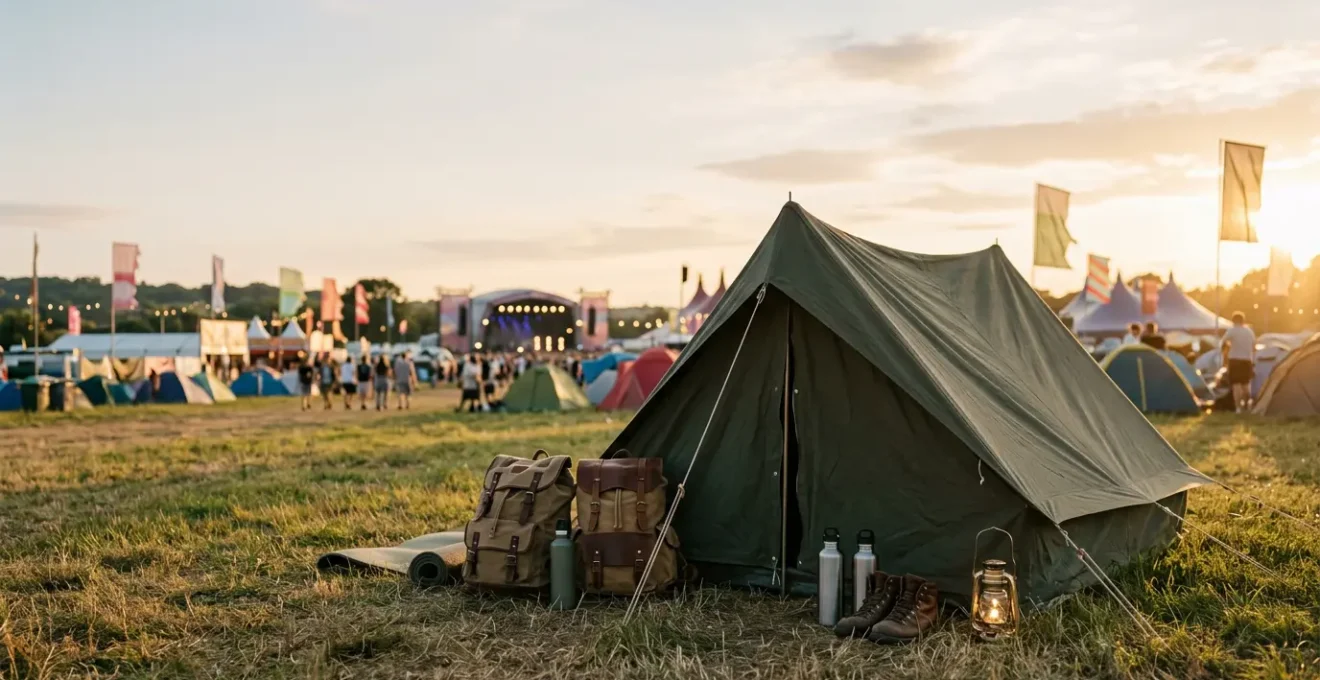
The secret to surviving a multi-day festival isn’t physical endurance; it’s adopting a headliner’s mindset for strategic energy management.
- Your stamina is a finite resource—an « energy budget »—that you must actively protect and allocate to experience the acts that matter most to you.
- Every choice, from your gear and campsite location to your hydration plan, is a strategic decision that either preserves or drains this budget.
Recommendation: Stop thinking like a spectator and start planning like the main act. Prioritize preparation and recovery to ensure you have the energy for a peak performance on the final day.
The scene is brutally familiar. It’s Day Two, the sun is high, and you see them: the rookies. They’re dragging themselves from their sweat-soaked tent, looking like they’ve just finished a marathon they didn’t train for. They blew their entire energy budget on the opening acts and now face the main event with an empty tank. They followed the basic advice—they packed water, wore comfortable-ish shoes, and remembered their ticket. But they fundamentally misunderstood the challenge. A multi-day festival isn’t a sprint; it’s a grueling endurance campaign fought on multiple fronts: physical, mental, and sensory.
The internet is littered with generic packing lists and platitudes. « Stay hydrated. » « Get sleep. » This is surface-level noise. It tells you *what* to do, but not *why* it’s critical or *how* these elements interconnect into a single system of survival. The real problem isn’t forgetting your sunscreen; it’s the exhaustion cascade, where one poor decision—like choosing the wrong tent spot—triggers a domino effect of poor sleep, dehydration, and ultimately, a ruined experience. But what if the key wasn’t just to endure the festival, but to conquer it? What if you approached it not as a chaotic party, but as a strategic mission?
This is the veteran’s mindset. It’s about reframing the entire experience around one core principle: proactive energy management. This guide throws out the rookie checklist. Instead, we’ll break down the battlefield into its core components—your gear, your environment, and your timeline—to give you the tactical knowledge to not just survive, but to thrive. You’ll learn to think like a headliner, preserving your power so you can be front and center, full of life, when the act you came for finally takes the stage.
This guide will equip you with the veteran-level strategies needed to master your festival experience. We will explore the critical gear, the environmental factors, and the planning tactics that separate the rookies from the pros.
Contents: Mastering the Festival Grind
- Foam or Custom Molded: Which Earplugs Save Your Hearing and Sound Good?
- CamelBak or Bottle: How to Stay Hydrated in the Mosh Pit?
- Shade or Silence: Where to Pitch Your Tent for Maximum Sleep?
- The Back Pocket Error That Loses Your Phone in 5 Minutes
- Sequencing & Planning: Breaking in Your Boots Before the Festival
- Train, Plane, or Car: Which Is Most Reliable for Winter Tours?
- Why Drinking Water Immediately Before Singing Doesn’t Hydrate Your Cords?
- What Separates a Festival Headliner Set from a Mid-Card Performance?
Foam or Custom Molded: Which Earplugs Save Your Hearing and Sound Good?
The first casualty of a rookie festival-goer is their hearing. Constant exposure to high-decibel sound isn’t just a long-term risk; it’s a massive drain on your immediate energy budget. Your brain works overtime to process the sonic assault, leading to headaches, fatigue, and sensory burnout. This isn’t about blocking sound; it’s about managing it. Cheap foam plugs muffle everything, turning a multi-million dollar sound system into a muddy mess. They create a sense of isolation and rob you of the musical fidelity you paid for. This is a false economy—you save a few dollars but sacrifice the core experience.
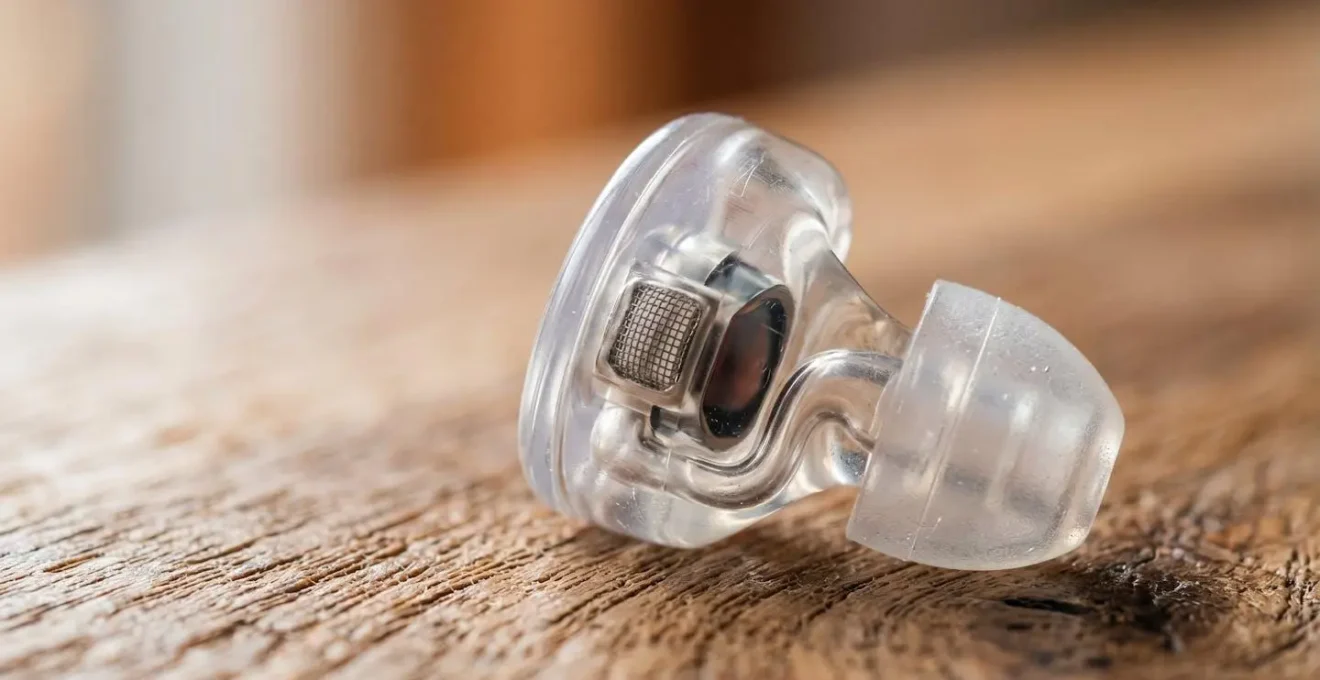
The veteran’s choice is high-fidelity earplugs. Unlike foam, these are engineered with acoustic filters that lower the overall volume without distorting the sound. You hear the crisp highs and deep lows, just at a safer level. They allow you to have conversations without yelling and, most importantly, prevent the physical and mental drain of auditory overload. Think of them not as protection, but as an audio equalizer for your environment. The difference is stark; a landmark study found that 42% without earplugs experienced temporary hearing shifts, compared to just 8% of those who wore them. Investing in a good pair is a direct investment in your stamina and your ability to enjoy the music on day three as much as on day one.
CamelBak or Bottle: How to Stay Hydrated in the Mosh Pit?
Hydration isn’t just about drinking water; it’s about maintaining your body’s operational efficiency. Even slight dehydration triggers the exhaustion cascade. Your energy plummets, your mood sours, and your decision-making falters. According to a 2022 Journal of Sports Medicine study, a 30% energy reduction can result from dehydration at multi-day events. The central question for a festival-goer is one of logistics: how do you carry and consume enough water without it becoming a burden? A disposable bottle is the rookie’s choice. It’s inefficient, requiring constant refills at crowded stations and forcing you to abandon your spot in the crowd. It’s an obstacle, not a tool.
The superior tactical choice is a hydration pack like a CamelBak. It holds significantly more water (2-3 liters), distributing the weight comfortably on your back and leaving your hands free. The real advantage is the accessibility—the drinking tube allows for small, consistent sips without ever stopping what you’re doing. This encourages the kind of steady intake that is optimal for hydration, preventing the cycle of extreme thirst followed by guzzling, which can overwhelm your system. Furthermore, many festivals have free water refill stations, making a hydration pack a cost-effective and environmentally sound decision. It transforms hydration from a chore into a seamless background process, preserving both your energy and your prime spot in the crowd.
Shade or Silence: Where to Pitch Your Tent for Maximum Sleep?
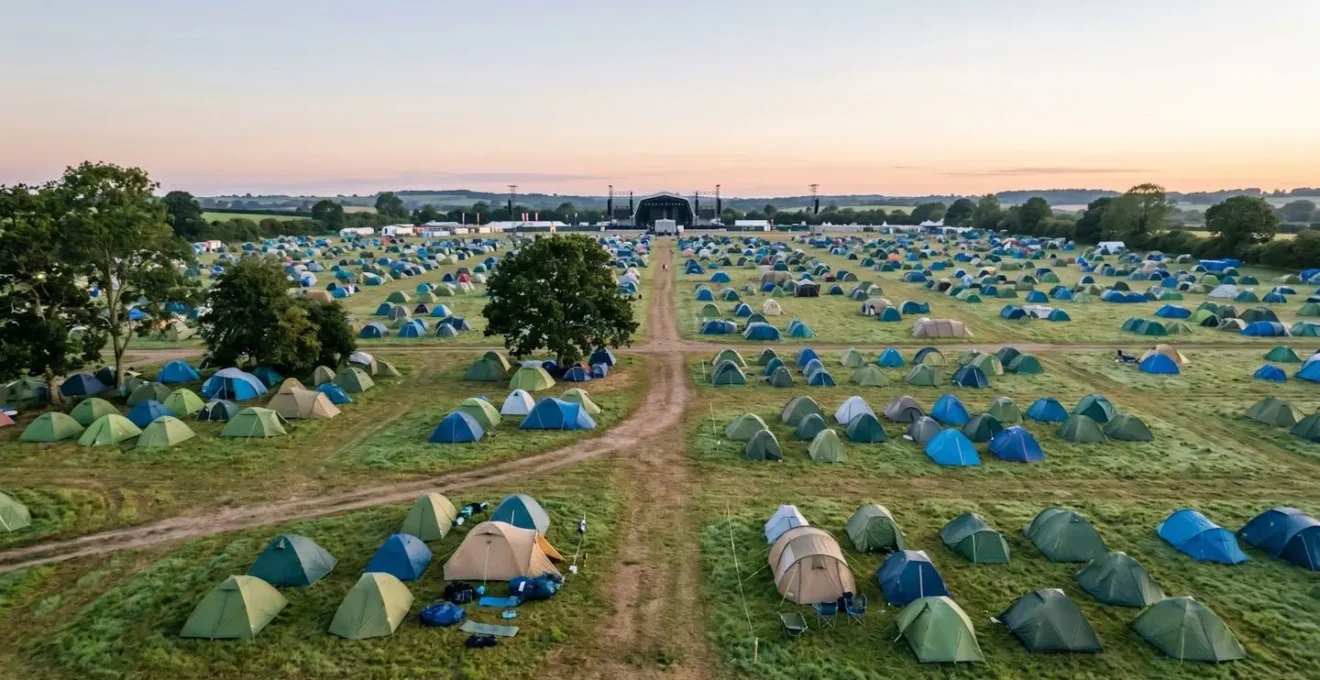
Your campsite is not just a place to crash; it is your forward operating base. Its location is the single most important decision you will make for your energy budget. The rookie error is to prioritize convenience, setting up near the main path or close to the stages. This guarantees a weekend of interrupted sleep from constant foot traffic, late-night revelers, and the ceaseless thumping of a distant soundcheck. The choice is often framed as a simple trade-off between shade (to avoid the 7 a.m. « tent sauna ») and silence. But the veteran knows the real objective is to align your sleep environment with your body’s natural clock.
The Circadian Reset: Proof from the Wilderness
This isn’t just campfire wisdom; it’s science. University of Colorado Boulder researchers found that just 48 hours of camping was enough to significantly reset participants’ internal clocks. The study revealed that exposure to natural light-dark cycles caused the onset of melatonin—the hormone that regulates sleep—to shift nearly 1.5 hours earlier. This demonstrates how rapidly your body can recalibrate away from artificial light, promoting higher quality rest. Choosing a campsite that maximizes this effect is a powerful strategic move.
The strategic imperative is to find a location that balances both shade and distance. You must seek out a spot far from the high-traffic arteries and away from the direct line of sight (and sound) of any 24-hour stages or generators. Your goal is to maximize your exposure to the natural light-dark cycle, which is crucial for resetting your circadian rhythm. The morning sun will wake you, but if your tent is under the shade of a tree, it will be a gentle, natural awakening, not a frantic escape from a solar oven. This quality rest is a non-negotiable deposit into your energy bank, directly fueling your ability to go hard on the final day.
The Back Pocket Error That Loses Your Phone in 5 Minutes
Losing your phone at a festival is more than an inconvenience; it’s a catastrophic energy drain. It’s your lifeline, your map, your camera, and your way to find your crew. The moment it’s gone, your mission shifts from enjoyment to a frantic, stressful, and often fruitless search. This crisis consumes hours of your time and tanks your morale. And the most common cause is a simple, avoidable mistake: the back pocket. It’s the number one target for opportunistic thieves who thrive in dense crowds. It offers no resistance and zero awareness. Data confirms this is a widespread threat; law enforcement data from major festivals reveals that nearly 50 stolen phones were recovered by police at a single weekend of Coachella in 2024.
Treating your valuables with this level of carelessness is a symptom of a reactive, not proactive, mindset. The solution is to adopt a system of active asset management. This means never using a back pocket. Ever. The most secure options are a zippered front pocket, a crossbody bag worn on your chest, or a fanny pack. The key is keeping your valuables in your line of sight and in a place that requires deliberate effort to access. Before you even leave for the festival, your preparation should include digital security: enable ‘Find My Device’ and screenshot your tickets and schedule. Establish a physical, non-digital emergency meeting point with your group. By eliminating the possibility of this one simple error, you prevent a massive, self-inflicted blow to your energy and focus, keeping your mission on track.
Sequencing & Planning: Breaking in Your Boots Before the Festival
The battle for festival survival is won or lost weeks before the first note is played. The rookie focuses on what to pack; the veteran focuses on what to prepare. This includes your gear and your body. Showing up with brand-new, unbroken-in boots is a declaration of inexperience. The resulting blisters will become a constant, nagging drain on your energy and mobility, forcing you to sit out sets you’ve waited months to see. Breaking in your footwear—wearing them for several hours a day in the weeks leading up to the event—is a non-negotiable part of your physical conditioning.
This principle of preparation extends to your arrival. Rushing to set up camp on the morning the festival starts is a recipe for the exhaustion cascade. You burn critical energy in a stressful, time-pressured environment before the event has even begun.
Festival veterans consistently report that arriving the afternoon before the festival officially starts, rather than morning-of, creates a massive difference in energy levels. The extra time allows for leisurely setup without stress, a full night’s rest before music begins, and eliminates the exhaustion cascade that comes from rushing through security, setting up camp under time pressure, then immediately diving into performances.
– Festival Goers, iEDM Blog
This entire approach can be formalized into a strategic plan. It’s not just a packing list, but a complete method for managing your most valuable resource: your own stamina.
Action Plan: The Energy Budget Method
- Pre-Festival Taper: Treat the week before like marathon training. Focus on quality sleep and balanced nutrition to build up your baseline energy reserves.
- Schedule Downtime: Plan specific 30-minute blocks each day for strategic rest—sitting in the shade, eating a real meal at camp, or simply closing your eyes.
- Tiered Packing – Car Cache: Your car is a base. Store bulk water, extra food, and backup supplies there. You don’t need to carry everything at once.
- Tiered Packing – Campsite Hub: Your tent area is your forward base. Set it up for comfort and recovery with a canopy for shade, camp chairs, and essentials for refreshing.
- Tiered Packing – Day Pack: Your mobile kit. Carry only absolute essentials to stay light: hydration, phone, ID, and sunscreen. Every ounce saved is energy gained.
Train, Plane, or Car: Which Is Most Reliable for Winter Tours?
Your festival experience begins the moment you leave your house. The journey itself is a significant factor in your overall energy budget, and the mode of transport you choose can either be a deposit or a withdrawal. The rookie mistake is to only consider cost and convenience, ignoring the hidden tax of stress and fatigue. Arriving at the festival already drained from a difficult journey puts you at a massive disadvantage before you’ve even pitched your tent. Each option presents a different balance of control, stress, and energy impact.
Driving a car offers the most control over timing and gear capacity, but it comes at the high cost of traffic-induced stress, the hunt for parking, and the physical drain of being behind the wheel for hours. Public transport, like a bus or train, relinquishes control but drastically lowers your stress and energy expenditure. You arrive rested, having spent the travel time relaxing or sleeping. Rideshares offer a middle ground, but with variable costs and social dynamics. Analyzing these options through the lens of energy preservation is a key strategic decision.
| Transport Mode | Control Level | Stress Level | Energy Impact | Best For |
|---|---|---|---|---|
| Car | Full control over timing and routes | High stress from traffic, parking searches | Draining – exhaustion before arrival | Groups with heavy gear needing flexibility |
| Public Transport | No control over delays or schedule | Low stress – no driving responsibility | Preserving – arrive refreshed | Solo travelers or light packers prioritizing relaxation |
| Rideshare | Moderate – choose pickup time but not route | Medium stress – cost and social variables | Balanced – some planning required | Small groups sharing costs and wanting door-to-door service |
Why Drinking Water Immediately Before Singing Doesn’t Hydrate Your Cords?
The common wisdom to « stay hydrated » is often misunderstood. Many believe that chugging a bottle of water right when you feel thirsty or before a strenuous activity is an effective strategy. This is a fundamental error in understanding human physiology. Water doesn’t instantly become available to your system. It takes time for your body to absorb and distribute it. When it comes to vocal health—or any physical performance—surface-level hydration is a myth. The water you drink now won’t hydrate your vocal cords for a singalong in five minutes. True hydration is systemic and must be maintained over time.
The feeling of thirst itself is a lagging indicator; it’s a warning sign that your body is already in a state of deficit. As Rayven Nairn, a dietitian at Johns Hopkins, bluntly states:
By the time you actually feel thirsty, it’s too late — you’re already too low on fluids.
– Rayven Nairn, M.S., R.D., L.D., Johns Hopkins University Student Health and Wellness Centre
This deficit has immediate consequences. In fact, medical research from UT Health Austin demonstrates that losing as little as 1.5% of body water impacts physical, mental, and emotional function. For a festival-goer, this translates to diminished stamina, poor concentration, and irritability. The only effective strategy is proactive, consistent hydration. This means sipping water steadily throughout the day, every day, starting even before the festival begins. It’s about maintaining a baseline of hydration, not desperately trying to fix a deficit once it’s already impacting your performance.
Key Takeaways
- Treat your energy like a finite budget, not an infinite well. Every decision should be weighed against its energy cost.
- Your gear (earplugs, hydration pack) and environment (tent spot) are not just items, but strategic tools for energy preservation and recovery.
- Proactive preparation—from breaking in boots to arriving early—is about eliminating future stress and preventing the exhaustion cascade before it can start.
What Separates a Festival Headliner Set from a Mid-Card Performance?
At any festival, there are two types of attendees. There are the « mid-card » performers, who wander aimlessly, react to whatever is in front of them, burn out by midday, and miss the acts they were most excited to see. Then there are the « headliners. » They move with purpose. They have a plan. They know when to engage and when to pull back and recharge. They are fully present and energized for the peak moments because they’ve managed their resources to get there. This distinction isn’t about physical fitness; it’s a difference in mindset.
The Headliner Mindset: A Study in Satisfaction
This concept is backed by behavioral observation. Sleep and wellness experts analyzing festival patterns have identified that attendees who adopt a « headliner mindset » report far greater satisfaction. These individuals implement deliberate energy management strategies—like pre-festival sleep banking, scheduling downtime, and strategic campsite selection. They make conscious choices to preserve their capacity to be fully present for their priority performances. This contrasts sharply with the « mid-card experience » of reactive attendees who exhaust themselves early, experiencing the festival’s climax through a fog of fatigue.
Adopting this headliner mindset means you are the main act of your own festival experience. You understand that your energy is your most valuable asset. You use gear to protect it, you choose your environment to replenish it, and you plan your schedule to deploy it strategically. You don’t just « go » to a festival; you execute a plan to conquer it. This is the ultimate separation between the rookie who is a victim of the festival’s chaos and the veteran who commands their own experience within it.
Ultimately, your next festival can be different. By applying these strategic principles of energy management, you can transform your experience from a battle for survival into a triumphant performance. Plan your mission, execute your strategy, and take your place in the crowd for the final set, ready and energized.