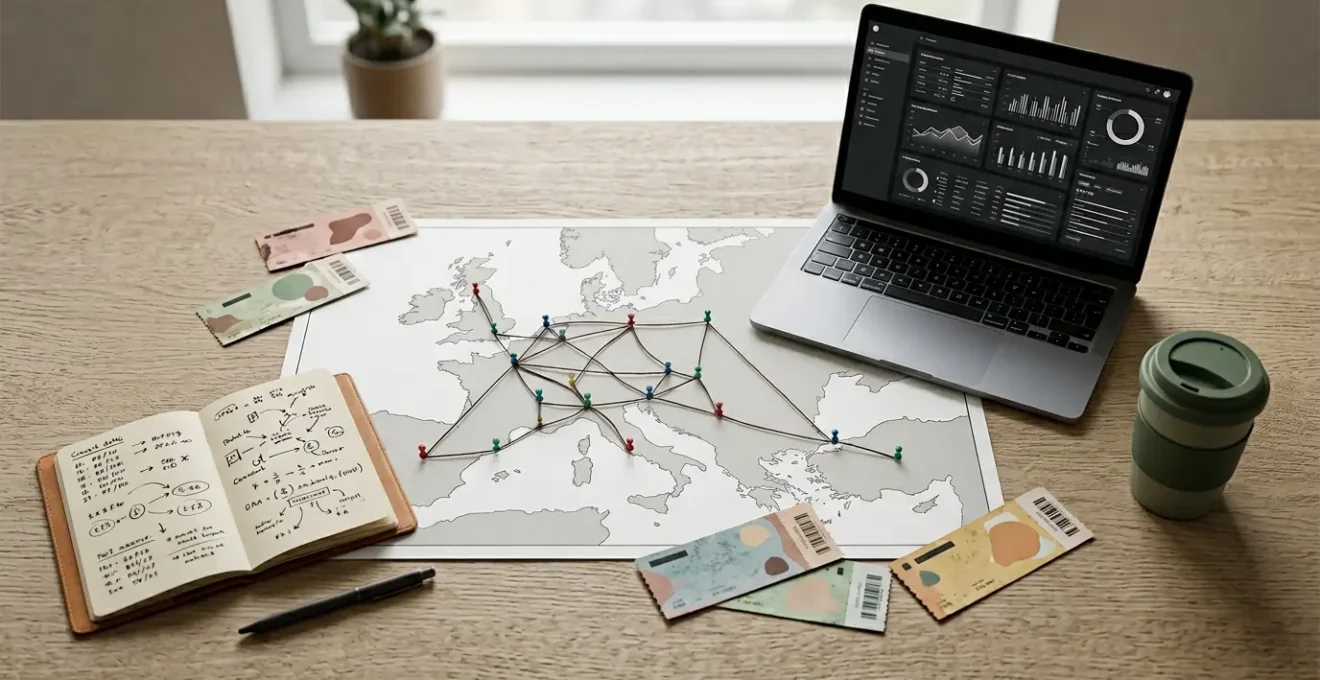
In summary:
- Treat your tour as a logistical operation, not a vacation, by focusing on optimizing time, money, and energy.
- Calculate risk-adjusted costs for travel and opportunity costs for time spent queuing to make smarter decisions.
- Implement strategic routing models like « Hub-and-Spoke » to drastically cut down on fuel and accommodation expenses.
- Develop a « Merch Logistics Plan » to protect your purchases as valuable assets.
- Budget for « The Fifth Act »—a post-tour phase dedicated to preserving memories and managing post-concert depression.
The thrill is undeniable: your favorite band announces a tour, and the dates align just right for you to catch them in three, four, maybe even five cities. For a dedicated superfan, this is the ultimate pilgrimage. The immediate instinct is to open a spreadsheet and start plugging in basic costs: tickets, a rough guess for gas, and cheap motels. This is the first and most common mistake. Standard vacation planning tactics will leave you exhausted, over budget, and potentially missing the very moments you set out to experience. The internet is full of generic advice to « book in advance » or « travel with friends, » but this barely scratches the surface of the complex operation that is « tour chasing. »
But what if the key to a successful multi-city tour wasn’t just about being thrifty, but about being a strategist? What if, instead of a tourist, you approached it like an experienced project manager? This shift in mindset is the difference between a stressful, money-draining scramble and a smooth, memorable, and financially sound adventure. It requires moving beyond simple budgeting to a framework of resource management—where your time, your energy, and your morale are assets just as valuable as your money. It’s about quantifying risk, understanding opportunity cost, and planning for every phase of the operation, from the first mile driven to the weeks after the final encore.
This guide provides that strategic framework. We will deconstruct the tour into its core logistical components, offering actionable models and data-driven insights to help you manage your budget, protect your assets, and maximize the return on your emotional and financial investment. Get ready to plan your next tour like a pro.
This article breaks down the essential logistical and financial strategies you need to master. Explore the detailed sections below to build your comprehensive tour plan.
Summary: Your Strategic Tour Planning Guide
- Train, Plane, or Car: Which Is Most Reliable for Winter Tours?
- Meet & Greet or Soundcheck: Which VIP Package Offers Real Interaction?
- 6 AM or 6 PM: When Should You Line Up for the Rail?
- The Poster Tube Mistake That Ruins Your Concert Experience
- Problem & Solution: Coping with Post-Concert Depression
- Why « Zig-Zag » Routing Is Killing Your Fuel Budget and Morale?
- Sequencing & Planning: How Fan Bases Coordinate Streaming Parties
- How to Survive a 3-Day Camping Festival Without Exhaustion?
Train, Plane, or Car: Which Is Most Reliable for Winter Tours?
Choosing your mode of transport for a winter tour is your first major logistical decision, and it’s one where the cheapest option is rarely the best. Winter travel introduces a critical variable: weather-related disruption. A canceled flight or a closed highway doesn’t just mean a delay; it can mean a missed show and a sunk cost on an expensive ticket. Therefore, your calculation must shift from a simple cost analysis to a risk-adjusted cost analysis. A slightly more expensive train ticket might be the most cost-effective choice when you factor in the high probability of airline cancellations and the physical stress of driving in hazardous conditions.
For instance, while cars offer flexibility, their reliability plummets in snow and ice. Flights are fast but are the most susceptible to widespread cancellations during winter storms. This is where rail travel often emerges as the superior option. It is not only significantly safer— passenger rail remains 17 times safer than car travel—but it is also less prone to weather-related shutdowns than air or highway travel. The core of a project manager’s approach is to minimize unforced errors. Choosing a more reliable, albeit potentially pricier, travel method is a classic example of mitigating a foreseeable risk.
Your Action Plan: Risk-Adjusted Travel Budgeting
- Calculate Total Potential Cost: Sum the base ticket price, cancellation insurance premium, and the estimated cost of a last-minute alternative if your primary travel is canceled.
- Assess Weather-Delay Probability: Research historical cancellation rates for your routes. Flights can have a 15-25% winter cancellation risk, while trains are closer to 5-10%.
- Quantify the ‘Show-Miss Risk’: Multiply the non-refundable cost of your concert ticket by the likelihood of disruption. Is a 20% chance of losing a $200 ticket worth the $50 you saved on a flight?
- Build a Contingency Fund: Allocate 10-15% of your total travel budget specifically for emergency rerouting or unexpected overnight accommodation due to delays.
- Factor in Last-Mile Reliability: Don’t forget the final leg. Budget an extra $50-150 for surge-priced rideshares from a suburban airport or station to the venue during a storm.
Meet & Greet or Soundcheck: Which VIP Package Offers Real Interaction?
VIP packages represent a significant investment, transforming a concert from a viewing experience into an interactive one. However, not all packages are created equal. The key is to analyze the « Return on Interaction » (ROI) you get for your money. With VIP meet-and-greet packages typically ranging from $1000 to $5000, it’s critical to understand what you’re actually buying. Is it a rushed, 30-second photo op with 100 other fans, or a genuine, albeit brief, moment of connection? This is where you must read the fine print with the cold eye of an investor, not the hopeful heart of a fan.
A Standard Meet & Greet often prioritizes volume, processing a large number of fans quickly. In contrast, a Premium Soundcheck Experience offers a longer, more passive form of interaction where you observe the band’s creative process, sometimes with a group Q&A. The most coveted are the Intimate VIP Packages, which limit the group size to create an environment for more meaningful conversation. Your choice should be a deliberate one based on your personal goal: are you seeking a photo for social media, or are you hoping for a memorable conversation? The cost does not always correlate with the quality of the interaction.
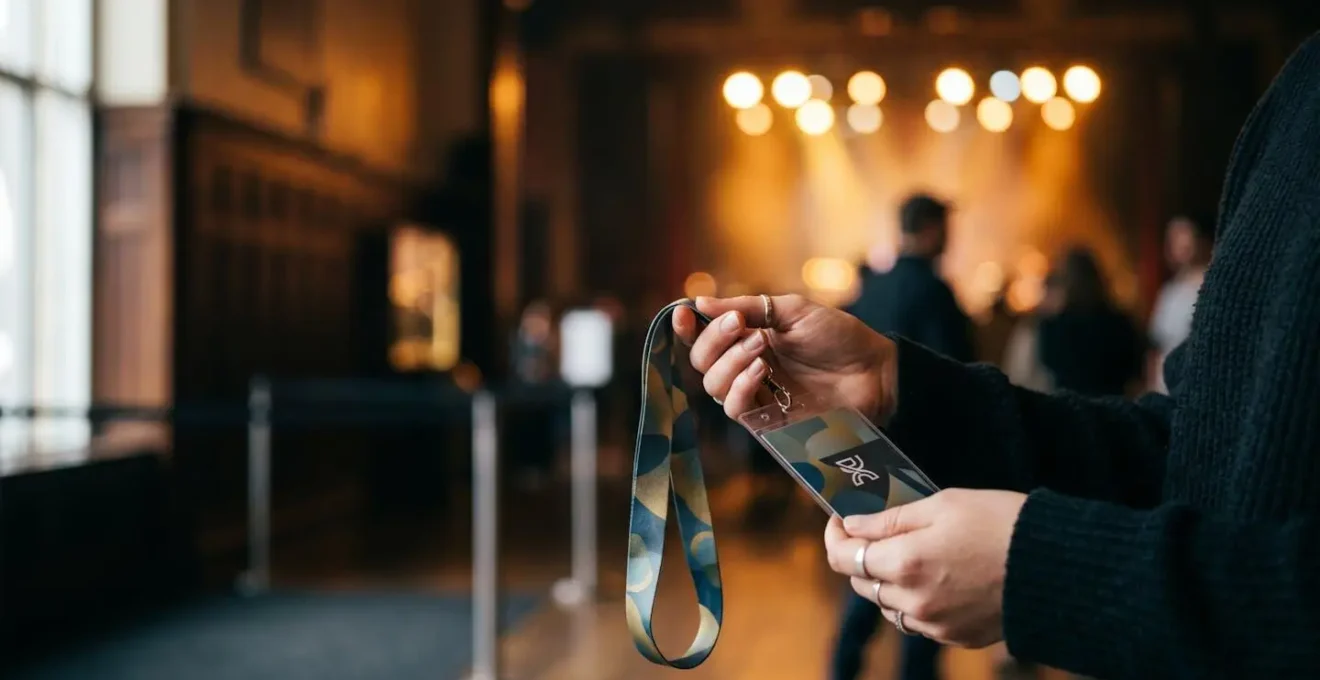
As the image suggests, the true value of these experiences lies in the feeling of exclusive access and personal connection. To make an informed decision, you must compare the specifics of each package—group size, duration of interaction, and included extras. The following table breaks down the typical offerings to help you analyze your potential ROI.
| Package Type | Typical Cost Range | Interaction Duration | Group Size | Best For |
|---|---|---|---|---|
| Standard Meet & Greet | $1000-$2500 | 30-90 seconds | 50-150 fans | Quick photo, brief hello |
| Premium Soundcheck Experience | $500-$1500 | 20-45 minutes | 20-100 fans | Watching performance prep, Q&A from distance |
| Intimate VIP Package | $2500-$5000 | 5-15 minutes | 10-30 fans | Meaningful conversation, multiple photos |
| Early Entry + Merch Access | $150-$400 | No direct interaction | 100-500 fans | Rail position, exclusive merchandise |
6 AM or 6 PM: When Should You Line Up for the Rail?
For many fans, being at the front-row barricade, or « the rail, » is the pinnacle of the concert experience. The conventional wisdom is simple: get there as early as possible. However, from a logistical standpoint, this is a flawed strategy. Time is a resource, and spending 12 hours in a queue has a significant opportunity cost. Those are hours you could have spent resting, exploring the city, or even working remotely to fund the next leg of your tour. The real question isn’t « how early should I line up? » but rather « what is the most efficient way to secure my desired position? »
The first step is research. Check fan forums and social media groups for venue-specific policies. Does the venue use a numbered wristband system that makes arriving at 6 AM pointless? Or is it a « General Admission rush » where the earliest arrivals are rewarded? Understanding the system is key. Secondly, you must calculate your personal ‘Rail Wage’: if you value your time at $20/hour, a 12-hour wait has an opportunity cost of $240. Is a spot at the rail worth that much, especially when an Early Entry package might cost less and save you the entire day? Finally, factor in the physical toll. Arriving at 6 AM might get you to the front, but you’ll be running on fumes by the time the headliner takes the stage. Arriving at 6 PM with 100% energy might lead to a more enjoyable experience, even from a few rows back.
Your Action Plan: The Opportunity Cost of the Rail
- Calculate Your ‘Rail Wage’: Divide what you value your leisure time at per hour by the hours you plan to queue. An 8-hour wait at $25/hour has an opportunity cost of $200. Is the rail worth that?
- Research Venue Policies: Before committing to a long wait, investigate if the venue uses numbered wristbands or if VIP early entry will make your queue time redundant.
- Compare to VIP Early Entry Costs: If an early entry package costs $200 and saves you 10 hours of waiting, it’s a worthwhile investment if your time is worth more than $20/hour.
- Factor in Energy Depletion: Honestly assess the physical cost. Will you enjoy the show at 50% energy from the rail, or is a better overall experience achievable by arriving later with full energy?
- Implement the Tag Team Strategy: Coordinate with friends to hold spots in shifts. This can reduce your individual time and energy cost by 60-75%, making a long wait more manageable.
The Poster Tube Mistake That Ruins Your Concert Experience
Concert merchandise is more than a souvenir; it’s a tangible piece of the tour experience. With the average fan spending $64 on merchandise per show, these items are valuable assets that require a logistical plan for protection. The most common mistake is the impulsive purchase of a limited-edition poster at the beginning of the night, only to have it creased, torn, or soaked in a spilled drink by the end of the encore. The flimsy plastic bag provided by the merch stand is not a protection plan. The classic poster tube is a step up, but it can be a cumbersome liability in a dense crowd or mosh pit.
A true logistical approach involves a Merch Protection Plan. This starts before you even arrive at the venue. First, research coat check availability and fees—this is your cheapest and most effective insurance policy for bulky items. Second, budget for your own protection supplies, such as a sturdy poster tube, a reusable tote bag for delicate clothing, and even bubble wrap for vinyl records. Third, be strategic about your purchase timing. For high-demand items, you may need to buy early, but for most merch, waiting until the end of the show (or even during the encore of a predictable setlist) is the safest bet.
For those driving, coordinating a « merch run » with your group during an opening act can be a game-changer, securing your assets in the vehicle before the main event. The ultimate pro move for a pit-goer is the « Decoy Poster » strategy: if you’re determined to get a poster and be in the crowd, buy two. One gets held, bumped, and potentially damaged, while the other stays pristine at coat check or in the car. It’s about calculating the true cost of your merch, which includes the cost of protecting it or potentially replacing it. A $40 poster is not a $40 poster if it gets ruined; it’s a $40 loss.
Problem & Solution: Coping with Post-Concert Depression
The tour is over. The last hotel has been checked out of, the final mile has been driven, and the silence is deafening. This is the onset of Post-Concert Depression (PCD), a very real feeling of emptiness and melancholy that follows an intensely high-stimulation period. A project manager doesn’t just abandon a project after the final deliverable; they move into a structured closing phase. Similarly, you shouldn’t let your tour experience just end. You must plan for what I call « The Fifth Act »: a budgeted, post-tour project dedicated to processing the experience and bridging the gap to the next one.
This phase is not about wallowing; it’s about actively channeling that residual energy into a productive and therapeutic project. The first step is to budget for documentation preservation. Allocate funds for printing a high-quality photo book, professionally framing your ticket stubs and wristbands, or upgrading your cloud storage to safely back up every photo and video. This act of creation transforms passive memories into a tangible, celebrated archive. It provides a sense of closure and accomplishment.

Another powerful strategy is to create an « Anticipation Bridge. » This involves immediately opening a new, dedicated savings account for the « Next Tour » and setting up a small, automatic weekly transfer. The psychological effect of actively planning for a future experience is a powerful antidote to the feeling that the best moments are behind you. It’s about turning the post-tour void into a period of organization, creation, and forward-looking preparation. By budgeting time and money for this final phase, you honor the experience you just had and lay the groundwork for the next adventure.
Why « Zig-Zag » Routing Is Killing Your Fuel Budget and Morale?
The tour schedule is announced, and in the excitement, you plot a route that looks like a child’s scribble: New York to Chicago, then back to Philadelphia, then out to Nashville. This is « zig-zag » routing, and it’s the single most destructive, yet common, mistake in multi-city tour planning. It exponentially increases your two most critical non-ticket expenses: fuel and time. A logical, linear route is the backbone of a financially sound tour. According to tour budgeting guides, a simple fuel cost calculation (total mileage ÷ vehicle MPG × gas price) reveals how quickly inefficient routing burns through your budget. A 500-mile detour isn’t just a long drive; it can be an extra $100 in fuel costs alone.
However, the true cost goes beyond fuel. It’s about the opportunity cost of your time and the depletion of your morale. A 10-hour drive day eliminates any chance for rest, exploration, or a decent meal. Two back-to-back 10-hour drives can lead to burnout, making you less likely to enjoy the show you’ve traveled so far to see. To combat this, you must adopt professional routing models.
The Hub-and-Spoke Strategy is ideal for dense tour clusters. You establish a base in a centrally located, affordable city and make shorter trips to nearby shows, returning to your « hub » each night. This saves on accommodation costs and eliminates the fatigue of daily packing and unpacking. For more spread-out tours, the Leapfrog Strategy is effective. You partner with another fan or group; one party takes shows 1, 3, and 5, while the other takes 2, 4, and 6, effectively splitting the total driving distance and costs. This requires trust and coordination but can cut travel costs and burnout by half. The goal is to minimize time spent in transit and maximize time spent resting or enjoying the experience.
Sequencing & Planning: How Fan Bases Coordinate Streaming Parties
The intricate coordination seen in online fan communities—like organizing global streaming parties to boost a new album—seems far removed from the gritty reality of a road trip. Yet, the skills and tools used in these digital campaigns are directly transferable to managing the complex logistics of a multi-city tour. The same fan who acts as a « Time Zone Coordinator » for a streaming event has the exact organizational skills needed to become the « Hotel Booker » for a tour group. This is the hidden power of fandom: turning digital coordination into real-world savings.
This principle is best illustrated by looking at how these fan-driven projects are managed. The core components are almost always the same: shared spreadsheets for tracking tasks, clear delegation of roles, and dedicated communication channels like Discord servers. By applying this framework to tour planning, a group of fans can unlock significant group purchasing power and streamline their entire operation. It’s a perfect example of turning intangible community trust into tangible financial benefits.
Case Study: Applying Digital Coordination to Tour Financial Management
Fan communities organizing streaming parties utilize sophisticated coordination tools that translate directly to tour budgeting. The ‘Time Zone Coordinator’ becomes the ‘Hotel Booker,’ researching and reserving multi-room Airbnb accommodations to achieve group rates that save 30-40% compared to individual bookings. The ‘Playlist Curator’ evolves into the ‘Route Planner,’ who uses mapping tools to optimize driving sequences and minimize fuel costs. The established trust from digital coordination unlocks real-world savings through group purchasing power. This includes coordinating the rental of a more cost-effective 12-passenger van instead of three separate cars, buying road supplies in bulk, and even negotiating block hotel rates. The existing communication infrastructure, like shared Google Sheets and dedicated Discord channels, provides a platform for real-time expense tracking, ensuring transparent financial accountability across the entire tour and eliminating disputes over who paid for what.
Key Takeaways
- Shift your mindset from a vacationer to a project manager; optimize for time, money, and energy.
- Your budget must account for risk (weather delays), opportunity cost (time spent in line), and asset protection (merchandise).
- The tour experience doesn’t end with the final song; plan and budget for a « Fifth Act » to manage post-tour blues and preserve memories.
How to Survive a 3-Day Camping Festival Without Exhaustion?
Following a band across multiple cities is a marathon, not a sprint. A three-day festival, or even a run of three shows in three different cities, can feel like the final, most grueling leg of that marathon. The biggest mistake fans make is focusing their budget on comfort (like a slightly better hotel) rather than on recovery. To survive and actually enjoy the entire run of shows, you must adopt a « Rolling Festival Mindset » and strategically budget for gear and practices that promote physical and mental endurance.
This starts by reallocating funds. Instead of a pricier hotel room, invest that $50-$100 in a recovery toolkit: high-quality compression socks to reduce leg swelling after hours of standing, a memory foam neck pillow for restorative sleep in the car, electrolyte powder packets to stay hydrated, and melatonin to ensure quality sleep in unfamiliar environments. Food is another area where strategic planning trumps impulse spending. Budget for one major grocery run every few cities to stock up on non-perishable, high-energy foods like protein bars, trail mix, and nuts. This simple step can cut your most underestimated budget category—road food—by 40-60%.

Perhaps the most critical tactic is energy pacing. You cannot go 100% every single night. Designate one show in every three-show run as your « recovery night. » On this night, you stand further back, skip the mosh pit, and maybe even leave right after the encore instead of waiting around. This conserves vital energy, allowing you to fully enjoy the other two shows at maximum capacity. Survival isn’t about toughness; it’s about smart energy management.
By adopting this strategic, logistical mindset, you transform a potentially chaotic and expensive trip into a well-executed operation. You’ll not only save money but also enhance your overall experience, ensuring you have the energy and resources to enjoy every single moment. Start applying these project management principles to your next tour plan today.