
The key to unlocking emotional expression in music isn’t achieving technical perfection, but reframing your relationship with mistakes and practice.
- Performance anxiety stems from treating music as a test with right/wrong answers, blocking authentic feeling.
- Effective practice focuses on emotional connection and the process of making sound, not just hitting the right notes.
Recommendation: Choose a teacher and a practice method that prioritizes creative exploration and emotional goals over rigid, performance-based benchmarks.
You feel it, don’t you? A deep-seated desire to pour your feelings into an instrument, to translate a rough day or a moment of joy into sound. Yet, when you sit down to play, a familiar tension creeps in. The fear of hitting a wrong note, of sounding « bad, » of being judged—even by yourself. This paralysis is incredibly common for adults returning to music. We bring the pressures of our adult lives, the fear of failure, and the need for perfection into what should be a sanctuary for self-expression. Many believe the solution is more discipline, more scales, more relentless practice to eliminate errors. But what if that’s the very thing holding you back?
What if the true path to emotional release isn’t about eradicating mistakes, but about embracing them? This guide is built on a counter-intuitive but liberating principle: your goal is not to play perfectly, but to play honestly. It’s about learning to use your instrument as a tool for emotional discovery, where every note, « right » or « wrong, » becomes part of your authentic story. It’s time to shift the focus from the final product—a flawless performance—to the intimate, fulfilling process of making music that is truly yours.
Throughout this article, we will dismantle the fears that block your expression, guide you in finding the right learning environment, and redefine what it means to « practice. » By the end, you will have a clear roadmap to transform your musical journey from a source of anxiety into a profound wellspring of emotional release and personal growth.
Summary: A Guide to Musical Expression Without Fear
- Why Your Fear of Wrong Notes Is Blocking Your Emotional Expression?
- How to Choose a Music Teacher Who Prioritizes Creativity Over Rigidity?
- Private Lessons or Group Classes: Which Is Better for Shy Beginners?
- The Mistake That Causes 70% of Adult Students to Quit in 3 Months
- When to Practice for Maximum Emotional Benefit in a Hectic Schedule?
- How to Structure a Practice Session That Actually Fixes Weaknesses?
- Why the Myth That Theory Kills Creativity Is Holding You Back?
- How to Break Through the Intermediate Plateau and Achieve Instrumental Mastery?
Why Your Fear of Wrong Notes Is Blocking Your Emotional Expression?
The fear of making a mistake is the single greatest barrier to emotional expression. When you’re focused on avoiding errors, your brain is in a state of high alert, preoccupied with judgment rather than feeling. It’s a performance mindset, even when you’re alone in your room. This anxiety isn’t a personal failing; it’s a near-universal experience, with some studies indicating that up to 96% of professional musicians experience performance anxiety. For an adult learner, this pressure can feel even more intense. You’re not just playing notes; you’re confronting a lifetime of conditioning that says mistakes are a sign of incompetence.
To break this cycle, you must fundamentally reframe the « wrong » note. It is not a failure; it is simply unexpected information. It’s a deviation that can lead to a new emotional pathway. The key isn’t to never play them, but to reduce your fear-based reaction *when* you do. The moment a wrong note ceases to be a catastrophe and becomes a creative starting point is the moment you start playing from the heart. You can actively retrain your brain to embrace these moments as opportunities for discovery.
A powerful way to do this is to make mistakes on purpose. This desensitizes you to the fear and transforms errors from failures into a playful game of exploration. Try this simple exercise:
- Step 1: Choose a simple scale or a very familiar melody.
- Step 2: Deliberately play one « wrong » note within a phrase. Make it intentional and obvious.
- Step 3: Don’t stop or flinch. Immediately find a way to resolve the unexpected note by moving to a nearby note that sounds good, turning the « mistake » into a moment of improvisation.
- Step 4: Repeat this, making different intentional mistakes each time and exploring new resolutions.
- Step 5: Notice the physical sensation. As mistakes become a conscious choice, the tension in your shoulders and hands begins to dissolve. You are teaching your body that the unexpected is safe.
How to Choose a Music Teacher Who Prioritizes Creativity Over Rigidity?
Finding the right teacher is arguably the most critical step in your journey toward emotional expression. A teacher who shares the perfectionist mindset will only reinforce your anxiety, turning lessons into a series of technical audits. Conversely, a holistic educator acts as a facilitator, creating a safe space where your emotional goals are as important as your technical ones. They understand that for an adult learner seeking release, the « why » you play is more important than the « what » you play. Their job is to give you the tools to express what’s inside you, not to mold you into a flawless replica of another performer.
But how do you identify such a teacher? The clues are often present in the very first conversation or trial lesson. You need to listen for their philosophy on creativity, mistakes, and personal goals. A teacher focused on rigidity will talk about curriculums, exams, and mastering the « basics » before you’re « allowed » to be creative. A teacher focused on expression will ask about your motivations, what you want to *feel* when you play, and how they can help you achieve that. They see creativity not as a reward for technical mastery, but as the very vehicle for it.
To help you vet potential instructors, you can use a simple checklist of green flags (positive signs) and red flags (warning signs). According to research into the student-teacher dynamic, a supportive environment is key. Pay attention to their language and priorities from day one.
- Green Flag: The teacher asks, « What do you want to feel when you play? » in the first meeting.
- Green Flag: They suggest improvisation or creative play within the first few lessons.
- Green Flag: They discuss your emotional goals alongside technical benchmarks.
- Green Flag: They encourage you to bring music you love to the lessons, regardless of genre.
- Red Flag: They say, « We’ll get to creativity after you master the basics. »
- Red Flag: They have a rigid, one-size-fits-all method with no room for your personal interests.
- Red Flag: They focus exclusively on exam preparation and grades.
- Red Flag: They dismiss your questions about emotional expression as « not important yet. »
Private Lessons or Group Classes: Which Is Better for Shy Beginners?
Once you’ve started looking for a teacher, the next question is the format: should you opt for the focused attention of private lessons or the shared experience of a group class? For a shy adult learner, the answer isn’t always straightforward. Both environments offer unique benefits and potential drawbacks related to emotional safety and performance pressure. The ideal choice depends on what you need most at this stage of your journey: a protected sanctuary for vulnerable work or the motivating realization that you are not alone in your struggles.
Private lessons offer the highest degree of emotional safety. It’s a one-on-one container where you can build deep trust with your teacher. You can be messy, make mistakes, and explore your feelings without the perceived judgment of peers. This is often the best starting point for those with significant performance anxiety, as the pressure is at its absolute minimum. However, this format can sometimes feel isolating and may not provide the sense of community that can be so encouraging.
Group classes, on the other hand, immediately dismantle the feeling of being the « only one » who is struggling. Seeing others grapple with the same challenges creates a powerful sense of solidarity and shared vulnerability. This can be incredibly liberating. The trade-off is a higher degree of performance pressure, as you will inevitably be playing in front of others. A third, less common but highly effective option, is the facilitated music circle, which focuses on collaborative sound-making and improvisation in a non-performance context, offering high safety and high connection.
This comparative analysis, drawn from principles discussed in studies on musical learning environments, can help you decide which format best aligns with your needs.
| Format | Emotional Safety | Social Connection | Performance Pressure | Best For |
|---|---|---|---|---|
| Private Lessons | High – Safe sanctuary for one-on-one work | Low – Limited peer interaction | Low – No audience except teacher | Those needing focused attention and maximum safety |
| Group Classes | Medium – Shared vulnerability with peers | High – Solidarity and community | Medium – Performing in front of classmates | Those who benefit from ‘I’m not alone’ realization |
| Facilitated Music Circles | High – Non-performance-based environment | Very High – Collaborative sound-making | Very Low – No individual spotlight | Shy individuals seeking community without judgment |
The Mistake That Causes 70% of Adult Students to Quit in 3 Months
While the statistic fluctuates, it’s an open secret in music education that a vast number of adult students quit within the first few months. The reason is rarely a lack of talent or discipline. It’s a fundamental misunderstanding of the goal. The single most destructive mistake is treating music like a work project: adopting a rigid, product-oriented mindset instead of a fluid, process-oriented one. This means you measure success by a final deliverable—a perfectly played piece—rather than by the experience of learning and the moments of emotional connection you find along the way.
When you’re product-oriented, every practice session is a pass/fail test. Every mistake feels like a project delay. The joy of simply making a beautiful sound is lost, replaced by the anxiety of not being « finished » or « good enough » yet. This pressure is unsustainable and inevitably leads to burnout and frustration. You didn’t pick up an instrument to give yourself another stressful deadline. You did it to feel something. The moment the « doing » becomes more important than the « feeling, » the journey is over.
The solution is to consciously shift your focus to the process. Celebrate the small things: the feeling of a chord resonating through your hands, the discovery of a new sound, a moment of losing yourself in a melody for 30 seconds. These are the real wins. This shift from product to process is the key to long-term persistence and fulfillment.
Case Study: The ‘Process vs. Product’ Mindset in Student Persistence
A review of research on why students quit music lessons reveals a critical pattern. Students who measured success by technical perfection and mastering pieces (a product-oriented approach) were significantly more likely to quit. They often cited a lack of fun, dissatisfaction with the music, and a low self-concept as their reasons. In contrast, students who focused on the sensory experience of making sound and moments of emotional connection (a process-oriented approach) showed much higher rates of persistence and long-term enjoyment. This highlights that for adult learners, connecting with the *joy of the process* is a far greater predictor of success than the relentless pursuit of a perfect product.
When to Practice for Maximum Emotional Benefit in a Hectic Schedule?
For busy adults, the question of « when to practice » often revolves around fitting a 30- or 60-minute block into an already packed day. This rigid, time-based approach is another remnant of the product-oriented mindset. It turns practice into another task to check off a to-do list. For emotional release, a far more effective strategy is emotional-cue practice. This means you don’t practice when the clock tells you to; you practice when your emotions call for it. Your instrument becomes a form of emotional first aid, a tool you reach for in real-time to process what you’re feeling.
This approach involves short, targeted « micro-doses » of music throughout your day. Feeling a wave of anxiety at work? Take a five-minute break to play a few slow, resonant chords to ground yourself. Feeling frustrated after a difficult conversation? Spend three minutes playing something loud and percussive to release that tension. Feeling happy? Amplify that joy by playing a piece you love. These short bursts are often more beneficial for emotional regulation than a single, long session because they directly link the act of playing to your inner state. It transforms your instrument from a task into a companion.
This doesn’t mean longer, structured practice has no place, but supplementing it with these « emotional-cue » sessions ensures that the primary function of your music remains expression. The goal is to build an instinctive habit of turning to your instrument for comfort, release, and celebration.
This framework reframes practice from a duty to a resource. You can tailor your playing to what you need in the moment, making every session, no matter how short, deeply purposeful.
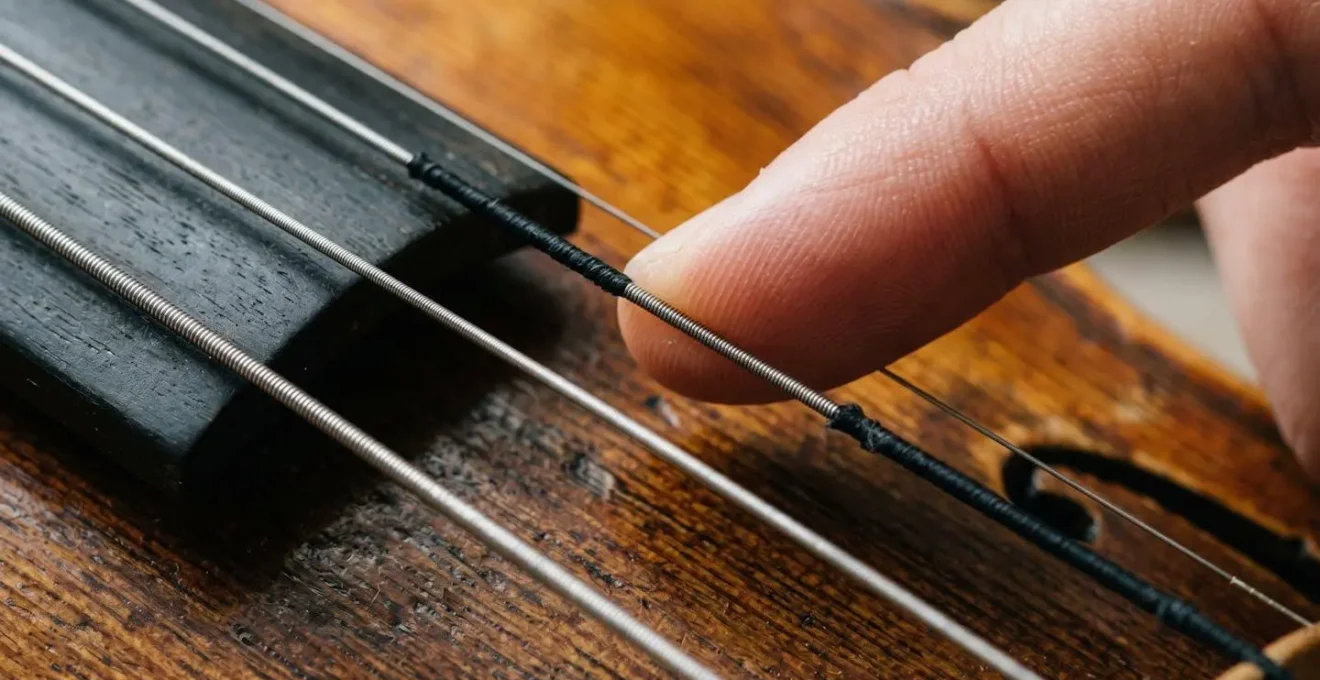
As the image above suggests, the connection can be in the smallest, most intimate moments. Here is a simple framework to get you started with emotional-cue practice:
- Feeling anxious: Play slow, simple, resonant chords for 5 minutes to ground yourself.
- Feeling angry: Play something percussive and loud to release physical tension.
- Feeling sad: Improvise a slow melody that mirrors your emotional state without judgment.
- Feeling overwhelmed: Engage in repetitive scale practice, focusing on the physical motion as a form of moving meditation.
- Feeling joyful: Play an upbeat piece you love to amplify and celebrate the positive emotion.
How to Structure a Practice Session That Actually Fixes Weaknesses?
Even with a focus on emotion, you’ll still want to improve your technical skills. The problem is that traditional « weakness-fixing » often feels like a joyless grind, sucking the life out of your practice time and reinforcing the fear of failure. If you spend 30 minutes drilling a difficult passage and end the session feeling frustrated and defeated, you’re less likely to come back tomorrow. A sustainable practice structure must balance technical work with emotional connection, ensuring you always start and end with a feeling of positivity and joy.
This is where the « Joy Sandwich » method comes in. It’s a simple, three-part structure that sandwiches the focused, technical work between two layers of free, expressive play. This approach, advocated by educators from institutions like Berklee, ensures that you are mentally and emotionally warmed up before tackling a challenge, and that you leave your instrument on a positive note, reinforcing the core reason you play: for the love of it. This structure also helps reframe what a « weakness » is. Often, a technical block is not a failure of your fingers, but a symptom of physical tension or an emotional disconnection from the music.
The « Joy Sandwich » allows you to address these psycho-physical aspects by incorporating different points of focus. By looping through a difficult passage with a variable focus—first on sound, then on physical relaxation, then on emotional intent—you engage your whole self in solving the problem, rather than just brute-forcing the notes.
Your Action Plan: The Joy Sandwich Practice Structure
- Top Bun (5-10 min): Start your session with free, expressive play. Improvise, noodle, or play a piece you absolutely love with no technical goals. The only aim is to connect with your instrument and the joy of making sound.
- The « Meat » (15-20 min): Now, tackle your technical weakness. Isolate the difficult passage and apply a « Variable-Focus Loop. » Play it through three times, each time with a different focus: 1) Focus only on the sound quality. 2) Focus only on physical relaxation in your hands, shoulders, and jaw. 3) Focus only on the emotional intent behind the notes.
- Analyze the Weakness: After the loops, reflect. Is the problem really speed, or is it that you tense up *when* it gets fast? Reframing the problem from technical (‘I can’t play it’) to psycho-physical (‘I get tense’) opens up new solutions.
- Bottom Bun (5-10 min): End your practice session exactly as you began. Return to free, expressive play. Play something that makes you feel good. This is non-negotiable; it ensures you walk away feeling positive and eager to return.
- Log Your Feelings: After the session, take 30 seconds to jot down one thing you enjoyed or one moment of emotional connection. This reinforces the process-oriented mindset and tracks the « wins » that truly matter. A great resource on this is from Berklee Online’s guide to mental practice.
Why the Myth That Theory Kills Creativity Is Holding You Back?
For many creative people, « music theory » is a scary phrase. It conjures images of dusty textbooks, rigid rules, and mathematical formulas that seem antithetical to raw, emotional expression. This belief that theory kills creativity is a pervasive myth, and it may be the very thing preventing you from reaching a deeper level of expression. You have important, complex things to say with your instrument, but without a basic understanding of the language of music, you are effectively trying to write poetry with only a handful of words.
The key is to stop thinking of theory as a set of rules and start seeing it as a grammar of emotion. Think about spoken language: learning grammar and vocabulary doesn’t kill your ability to communicate; it empowers you to express nuanced and sophisticated ideas with precision. Music theory does the same. It gives names to the sounds that create feelings. Understanding why a minor chord feels melancholic or how a certain chord progression creates a sense of tension and release gives you a powerful palette to paint your emotional landscapes.
Instead of limiting you, theory liberates you. It allows you to move from accidentally stumbling upon sounds you like to intentionally choosing the sounds that perfectly match the feeling you want to convey. It is the bridge between what you feel inside and what an audience hears outside.

As music educator Tim Topham eloquently puts it, theory is not a cage but a key. This perspective shifts the entire learning process:
Grammar and vocabulary don’t kill your ability to speak; they empower you to express complex ideas. Music theory is the grammar of emotion, giving you the tools to say precisely what you feel.
– Tim Topham, Music Teacher Magazine
When you approach theory with this mindset, it becomes an exciting exploration of « why » music makes us feel the way it does, rather than a dry memorization of « what » the rules are.
Key Takeaways
- Your goal is honest expression, not technical perfection. Reframe mistakes as creative opportunities, not failures.
- Tie your practice sessions to your emotional state (« emotional-cue practice ») rather than a rigid clock-based schedule.
- A balanced practice structure, like the « Joy Sandwich, » integrates technical work with expressive play to prevent burnout.
How to Break Through the Intermediate Plateau and Achieve Instrumental Mastery?
Every long-term learner eventually hits it: the intermediate plateau. It’s that frustrating stage where you feel like you’re practicing constantly but no longer making tangible progress. Your skills stagnate, and the initial excitement of learning gives way to a sense of grind. For adult learners focused on emotional expression, this plateau can be particularly disheartening, as it often feels like a creative and emotional dead end. The primary cause of this plateau is often a disconnect from your original « why. » You’ve become so focused on learning new techniques and pieces that you’ve forgotten to actively create and express.
The path to breaking through this plateau and achieving true mastery lies in consciously shifting your focus from learning to creating. This means dedicating a significant portion of your practice time to activities like improvisation, composing your own simple melodies, or deeply reinterpreting existing music rather than just replicating it. This shift forces a higher level of integration between your technical skills, your theoretical knowledge, and your personal feelings. It’s the difference between reciting someone else’s poem and writing your own. This creative process is directly linked to well-being; an 8-week music therapy program with 256 participants showed it significantly enhanced emotional resilience and overall well-being.
True instrumental mastery isn’t just about playing fast or complex pieces. It’s about having such a deep command of your instrument and the language of music that it becomes a seamless extension of your inner world. It’s the ability to translate a feeling into sound with intention and immediacy. This is a mastery of expression, not just of technique.
Case Study: The Shift from Learning to Creating
A study of 283 students in professional music colleges found that the intermediate plateau was often caused by a disconnect from the original emotional reason for making music. The students who successfully broke through the plateau were those who intentionally shifted from a « learning » mindset (replicating others’ work) to a « creating » mindset (composing or deep improvisation). This act of creation forces the integration of theory, technique, and personal feeling. The research demonstrated that the path forward involves consciously reintegrating expressive play, keeping a music journal focused on feelings during practice, and measuring progress by moments of emotional connection rather than technical perfection alone.
Your journey with music is a personal one, and it deserves to be filled with joy and discovery, not fear and judgment. By embracing this process-oriented mindset, you give yourself permission to be human, to be imperfect, and to make music that is authentically, unapologetically yours. Begin today by picking up your instrument with the sole intention of making a sound that feels good. That is the first and most important step.