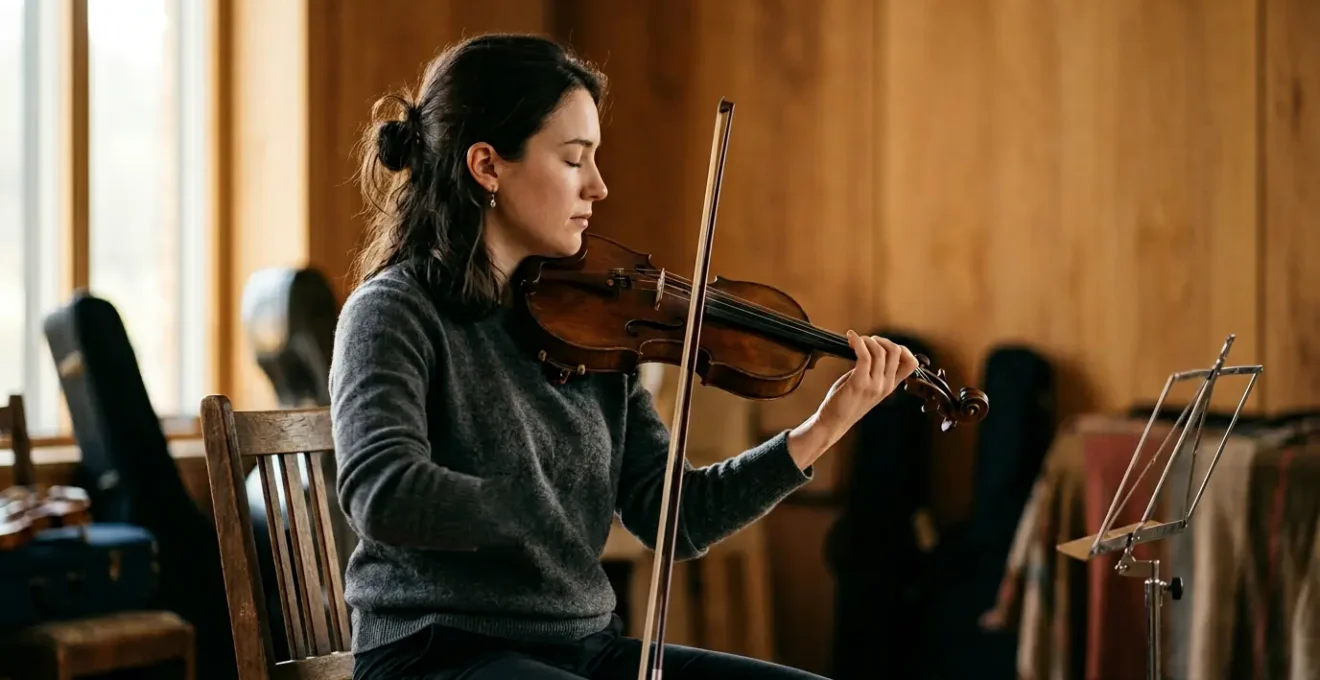
In summary:
- The root cause of most playing-related pain is not poor posture, but unconscious « parasitic » muscle tension.
- Effective warm-ups and mindful breathing are non-negotiable for preventing injury, especially in stressful environments.
- Instrument adjustment, like strap height, should prioritize relaxed joints over aesthetics to ensure technical freedom.
- Adopting a « No Pain, No Gain » mentality is a direct path to career-ending injury; listen to your body’s signals.
- True musical longevity comes from integrating physical self-care and ergonomic awareness into your daily practice.
For countless dedicated musicians, a long practice session or an intense performance comes with an unwelcome companion: a dull ache in the wrist, a sharp pain in the shoulder, or a persistent stiffness in the neck. The common advice often echoes familiar refrains: « sit up straight, » « take more breaks, » or « stretch before you play. » While well-intentioned, this advice often fails to address the deeper issue. Many musicians follow these rules yet still find themselves limited by fatigue and pain, watching their technical aspirations and even their love for their instrument slowly erode.
The frustration is understandable. You put in the hours, you focus on the music, but your own body seems to betray you. This cycle of effort, pain, and frustration can lead to burnout and, in the worst cases, career-threatening injuries. The conventional wisdom about « good posture » is often too rigid and simplistic, failing to account for the dynamic, athletic nature of making music. It treats the body like a static frame rather than a living, breathing system engaged in a complex physical act.
But what if the key to pain-free playing wasn’t about forcing your body into a single « correct » position, but rather about developing a profound and continuous awareness of your internal state? The true culprit is often the invisible enemy: parasitic tension. This is the unconscious tightening of muscles that aren’t even involved in the act of playing—the clenched jaw during a fast passage, the raised shoulders during a difficult chord change. This article will provide a new framework, moving beyond surface-level tips to explore the science of ergonomics and somatic awareness. We will dismantle the myths that lead to injury and build a foundation for a long, healthy, and joyous musical career.
This comprehensive guide explores the critical, often-overlooked ergonomic principles that separate a lifetime of music from a career cut short by pain. We will delve into the root causes of physical tension and provide actionable strategies to build a more sustainable and resilient relationship with your instrument.
Summary: How to Play Pain-Free for Hours by Optimizing Your Instrumental Ergonomics?
- Why Unconscious Tension Is the Root Cause of Your Speed Limit?
- How to Warm Up in 10 Minutes Before a Cold Venue Gig?
- Standing Performance or Sitting Practice: How to Adjust Your Strap Height?
- The « No Pain No Gain » Fallacy That Ends Musical Careers
- Problem & Solution: Fixing Shallow Breathing to Reduce Stage Tension
- When to Practice for Maximum Emotional Benefit in a Hectic Schedule?
- Speed or Feel: Which Should You Prioritize for Professional Gigs?
- How to Plan a Profitable DIY Tour Without Going into Personal Debt?
Why Unconscious Tension Is the Root Cause of Your Speed Limit?
Every musician has hit a technical wall—a speed they just can’t seem to surpass, no matter how many hours they practice. The common assumption is that the limitation lies within the primary muscles doing the work, such as the fingers or forearm. However, the true bottleneck is almost always unconscious parasitic tension. This refers to the subtle, and sometimes not-so-subtle, tensing of muscle groups that have no productive role in playing the instrument. It’s the tightened jaw, the raised shoulders, the stiff neck, or the rigid torso that accompanies a challenging musical passage.
This extraneous tension acts like a brake on your entire neuromuscular system. It restricts blood flow, reduces dexterity, and forces your primary playing muscles to work much harder to overcome the internal resistance. The energy you should be channeling into clean, efficient movement is instead wasted fighting your own body. This not only caps your technical ceiling but also dramatically increases the risk of repetitive strain injuries (RSI). The brain learns to associate difficult passages with this full-body state of tension, creating a feedback loop where the mere thought of a fast solo can trigger a physical « lock-up. »
Breaking this cycle requires a shift in focus from « practicing harder » to « practicing smarter. » The goal is to develop a deep somatic awareness—a conscious internal listening skill. By learning to identify and release this parasitic tension, you free up vast reserves of neurological bandwidth and physical energy. This allows your movements to become more fluid, efficient, and, ultimately, faster and more precise. The first step is to learn how to map your body and identify where these tension habits hide.
Action plan: Body mapping to identify parasitic tension
- Mindful Playing: Practice daily by continuously checking in with your body as you play, moving your awareness from your fingers to your shoulders, jaw, and back.
- Tension Spotting: Notice any discomfort or tightening in unrelated muscles (jaw, shoulders, neck) during technically demanding passages. Actively scan for these hotspots.
- Postural Adjustment: When parasitic tension is detected, pause and consciously release the muscle. Adjust your posture, positioning, or even the passage’s tempo until you can play it relaxed.
- Frequent Resets: Take frequent breaks during long practice sessions to stand, stretch, and perform posture resets, releasing any accumulated tension.
- Ergonomic Setup: Ensure music stands or screens are placed at eye level to maintain a neutral spine and prevent neck strain, a common source of parasitic tension.
How to Warm Up in 10 Minutes Before a Cold Venue Gig?
Arriving at a cold, drafty venue before a gig is a familiar scenario that can sabotage a performance before the first note is played. Cold muscles are tight, unresponsive, and highly susceptible to injury. A proper warm-up is not a luxury but a professional necessity. In fact, compelling research shows the profound impact of this preparation; studies demonstrate that just 20 minutes of focused warm-up activity can decrease gradual-onset injuries by up to 65%. Even with only 10 minutes, a strategic routine can make all the difference between a fluid performance and a painful struggle.
The key is to generate internal and external warmth efficiently. This involves gentle, whole-body movements to increase circulation, followed by instrument-specific exercises. An effective routine could start with arm swings, shoulder rolls, and torso twists to get blood flowing. Then, focus on the hands and fingers. Gentle finger stretches, wrist rotations, and even rubbing hands together can bring life back to cold extremities. It’s crucial to avoid aggressive stretching, which can cause micro-tears in cold muscles.
This process is about preparing your body for the physical and mental demands of performance. It’s a moment to connect your mind, breath, and body before engaging with the instrument. The following image illustrates a key component of this process: combining gentle finger movements with focused breathing to generate warmth from within, even in a chilly backstage environment.

As this visualization suggests, your breath is a powerful tool for warmth and relaxation. Combining slow, deep diaphragmatic breaths with your physical warm-up helps calm the nervous system and further improve circulation. The case of world-famous cellist Raphael Wallfisch provides an excellent real-world example. He notes that as pre-show adrenaline rises, the body’s fight-or-flight response can actually make hands colder by redirecting blood flow. His solution is pragmatic: he wraps his fingers around a warm cup of tea and begins with simple, large-muscle movements on the instrument, like octave shifts on one string, to activate circulation before tackling anything technically complex. This expert approach shows that a smart warm-up is about physiological awareness, not just mechanical repetition.
Standing Performance or Sitting Practice: How to Adjust Your Strap Height?
One of the most common ergonomic disconnects for guitarists and bassists occurs between their practice environment and their performance reality. Many musicians spend hours practicing while sitting, with the instrument resting perfectly on their leg, only to stand up for a gig and find their technique falls apart. This discrepancy is almost always due to a poorly adjusted strap height, which radically alters the geometry of how the player interacts with the instrument. The goal is to achieve dynamic alignment, where the instrument’s position relative to your body remains consistent whether you are sitting or standing.
The ideal method is to adjust your strap so that the guitar or bass hangs at the exact same height when you stand as it does when you’re seated. This creates a seamless transition and ensures that the muscle memory you build in the practice room is directly transferable to the stage. A strap set too low may look cool, but it forces the fretting hand into extreme wrist flexion and the picking hand into an awkward angle, both of which are direct paths to tendonitis and carpal tunnel syndrome. Conversely, a strap set too high can cause shoulder and neck strain.
A personal account from a musician forum perfectly illustrates this point. A guitarist who was struggling with his downpicking speed and solo execution while standing made a simple change: he raised his guitar strap by just a few centimeters. This minor adjustment dramatically improved the angle of his picking hand, allowing his pinky to pivot correctly on the guitar body for fast tremolo picking. While his fretting arm needed a short period to adapt to the new position, he quickly reported that his technical control while standing finally matched his performance when sitting down. This small change unlocked his full technical potential on stage.
An ideal strap height is one where your wrist can remain as straight/relaxed as possible, not saying it has to be perfectly straight but no crazy angles happening (will put tension in the tendons in your wrist).
– Guitar ergonomics forum contributor, Fractal Audio Systems Forum
The « No Pain No Gain » Fallacy That Ends Musical Careers
In the world of athletics, the mantra « no pain, no gain » is often celebrated as a badge of honor. However, for a musician, applying this philosophy is a catastrophic mistake that can lead to permanent, career-ending injuries. The physical demands on a musician are not about explosive, high-impact force; they are about fine motor control, endurance, and repetition. Pushing through sharp, stabbing, or radiating pain is not a sign of dedication—it’s a sign of impending damage. The statistics are sobering: studies have found that anywhere from 50 to 76 percent of professional musicians report sustaining musculoskeletal injuries at some point in their careers.
It is crucial to differentiate between two types of physical sensation: productive discomfort and destructive pain. Productive discomfort is the mild fatigue or dull ache in a muscle after it has been worked effectively, like the feeling in your fingers after a long session of building calluses. This is a sign of adaptation and growth. Destructive pain, on the other hand, is sharp, burning, tingling, or numbing. It’s a clear signal from your nervous system that you are causing tissue damage. Ignoring this signal is like ignoring the oil light in your car; you might be able to drive a little further, but a catastrophic breakdown is inevitable.
No Pain, No Gain is a disasterous policy for a musician. If it hurts, back off. THIS IS SERIOUS STUFF: is it worse to have to not play for a few months… or to risk a permanent injury, disability, pain, and never playing again?
– Musicians and Injuries Resource, University of Nebraska-Lincoln RSI Guide
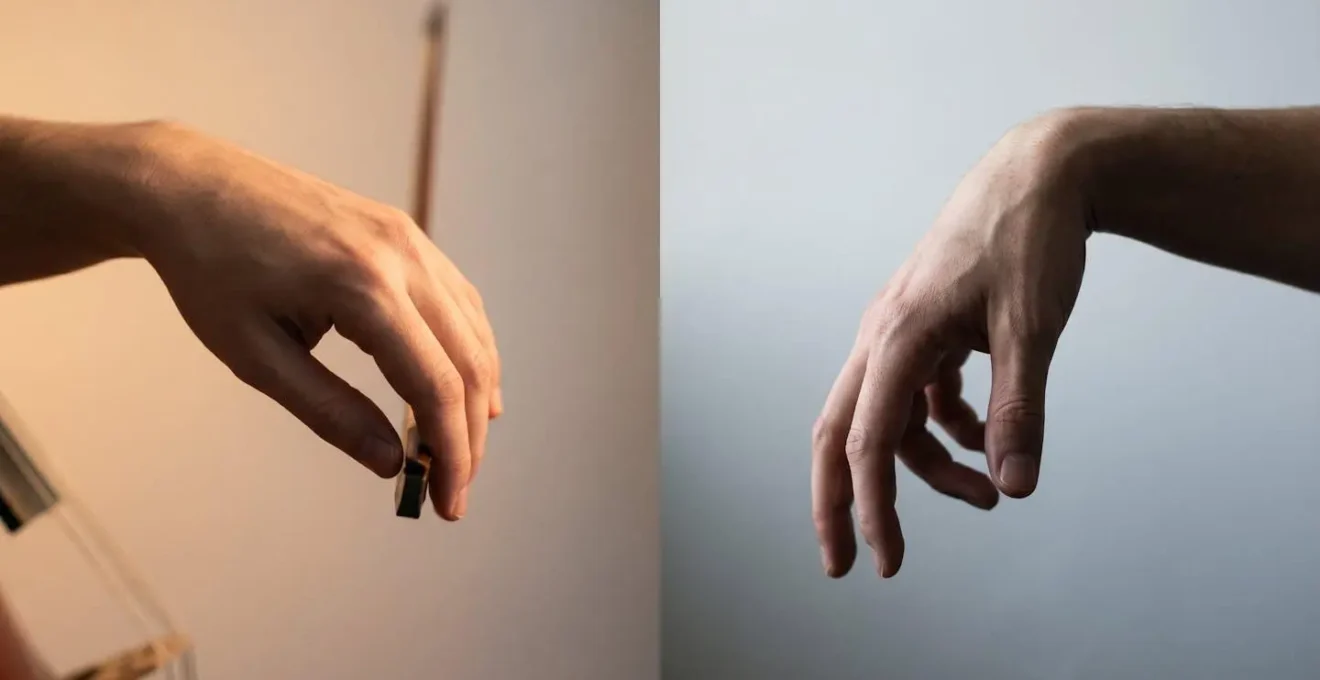
This quote frames the choice perfectly. The short-term frustration of stopping or scaling back practice is infinitely preferable to the long-term devastation of an injury that takes away your ability to play altogether. The image below symbolically contrasts the healthy, relaxed hand position of productive practice with the tense, hyper-extended position that leads to destructive pain.
Learning to listen to your body and respect its limits is the single most important skill for career longevity. True strength as a musician lies not in your ability to endure pain, but in your wisdom to prevent it. A healthy musician is a practicing musician, and your primary responsibility is to keep yourself in playing condition for the long haul.
Problem & Solution: Fixing Shallow Breathing to Reduce Stage Tension
Stage fright and performance anxiety manifest physically in several ways, but one of the most immediate and detrimental is the disruption of breathing. When a musician becomes tense or nervous, their breathing pattern almost invariably becomes shallow, rapid, and chest-oriented. This triggers a cascade of negative physiological responses: it activates the sympathetic nervous system (the « fight-or-flight » response), increases heart rate, and, most critically, starves the muscles of the oxygen they need to function efficiently. This creates a vicious physiological feedback loop where tension causes shallow breathing, and shallow breathing creates more physical tension.
This breath-holding pattern is particularly insidious because it often happens subconsciously. A musician might be so focused on executing a difficult passage that they don’t realize they’ve been holding their breath or taking tiny, ineffective sips of air. The result is a build-up of tension, a loss of fine motor control, and a feeling of being overwhelmed and out of control. Many musicians misattribute this feeling solely to « nerves » without realizing it has a correctable, physical root cause.
The solution is to consciously integrate deep, diaphragmatic breathing into your practice routine so that it becomes an automatic, stabilizing habit during performance. This means focusing on breathing from the belly, allowing the abdomen to expand on the inhale and contract on the exhale. Start by practicing this away from the instrument. Then, apply it to your warm-up scales, syncing your breath with the phrases. Identify the moments in your repertoire where you tend to hold your breath and consciously practice breathing *through* them. As cellist Raphael Wallfisch demonstrates in managing cold venues, maintaining controlled breathing patterns is essential for keeping a « lovely, flexible warmth » in the hands, even when adrenaline is high. By mastering your breath, you gain a powerful tool to short-circuit the anxiety feedback loop, keeping your body relaxed and your mind clear under pressure.
When to Practice for Maximum Emotional Benefit in a Hectic Schedule?
In the life of a busy musician, practice can often feel like another task to be checked off a long to-do list. When approached this way, it becomes a source of stress rather than a source of joy and artistic fulfillment. The timing and framing of your practice sessions can have a profound impact on their emotional and technical effectiveness. It’s not just about *how long* you practice, but *when* and *how* you enter and exit that creative space. For maximum emotional benefit, practice should be a sanctuary, not a chore.
One powerful technique is the mental bracketing ritual. This involves creating a clear transition from your everyday life into your practice mindset, and another clear transition out of it. Before you even unpack your instrument, take two minutes to perform some whole-body movements and set a specific, positive goal for the session (e.g., « to make this one phrase feel effortless, » not « to grind this passage for an hour »). Unpack your instrument with a focused, deliberate demeanor, treating it with respect. This ritual signals to your brain that you are entering a special, focused state.
Equally important is the cool-down period. Ending a session abruptly, especially on a note of frustration, can create a negative mental association with your instrument. Always end by playing something you love and can play well, leaving you on a positive emotional note. This frames the entire experience as rewarding. As Jeremy Berry, violist of the Calidore String Quartet, explains, the beginning of the session sets the tone for everything that follows. He starts with a core concept, focusing on breath and relaxation, which then infuses the rest of his practice. This approach transforms practice from a mechanical task into a mindful, emotionally enriching activity, regardless of how hectic your schedule is.
Speed or Feel: Which Should You Prioritize for Professional Gigs?
In the pursuit of virtuosity, many musicians become obsessed with speed. The allure of playing faster than anyone else can become the primary goal, often at the expense of what truly connects with an audience: feel, tone, and musicality. For professional gigs, where the goal is to create a compelling experience for the listener, this is a critical distinction. While technical facility is essential, prioritizing speed above all else is an ergonomic and artistic trap. As one jazz guitar mentor wisely put it, « Trying to play fast at all costs kills creativity. It kills any chance of developing a coherent style. »
The relentless pursuit of speed almost always leads to an increase in physical tension. As one instructor noted, this creates a dangerous subconscious link known as tension-speed coupling. When a musician learns a piece while tense, their brain associates that piece with a state of threat. To maintain this feeling of being just on the edge of control, the brain automatically speeds up the piece. This is why some tunes seem to « run away » on their own. The musician is trapped in a loop where the attempt to play fast creates tension, and the tension demands more speed.
The counterintuitive solution is to prioritize feel and relaxation. By practicing at deliberately slow tempos, you give your neuromuscular system the time and space to find the most efficient, relaxed pathways. This « slow practice » allows you to focus on the quality of each note—its attack, sustain, and emotional weight. Paradoxically, by eliminating the tension-speed coupling, you not only improve your musical feel but also unlock a higher potential for speed. A relaxed musician can always play faster than a tense one. For a professional gig, an audience will always remember a player with incredible feel and a few well-placed fast runs over a player who delivers a blur of sterile, soulless notes.
Key takeaways
- Somatic Awareness is King: Your ability to detect and release unconscious tension is more important for longevity than any static posture.
- Relaxation Unlocks Speed: True technical mastery comes from eliminating tension, not from brute force. Prioritize feel, and speed will follow.
- Pain is a Signal, Not a Goal: Differentiate between productive muscle fatigue and destructive joint or nerve pain. Never play through the latter.
How to Plan a Profitable DIY Tour Without Going into Personal Debt?
For an independent musician, a DIY tour is a rite of passage, but it can be a minefield of financial and physical risks. The romantic image of the open road often clashes with the reality of long drives, uncomfortable sleeping arrangements, and the constant pressure to break even. A successful tour is not just about booking gigs; it’s about sustainable planning that protects both your wallet and your body. The two are inextricably linked: a physical injury on the road can be a financial catastrophe. The high rates of injury among professional musicians—one study found that up to 70% of orchestral musicians will experience an injury during their lifetime—are only exacerbated by the rigors of touring.
Therefore, a crucial part of your tour budget must be allocated to physical longevity and preventive care. This should not be seen as a luxury, but as a non-negotiable business expense, as vital as gasoline or strings. This means budgeting for better accommodations periodically to ensure a good night’s sleep, rather than always opting for the cheapest motel or a friend’s floor. It means allocating funds for healthy food instead of relying on fast food to save money. It also means building a « wellness » line item in your tour budget for things like a professional massage or a visit to a physiotherapist if a minor ache begins to feel like a recurring problem.
Furthermore, your daily touring routine must incorporate ergonomic self-care. This includes giving your body time to warm up before you even touch your instrument, especially after a long drive in a cold van. It means maintaining a consistent cardiovascular exercise routine 3-5 days a week, even if it’s just a brisk walk or jogging in place. Proper hydration—aiming for at least two quarts of water daily—is also critical for muscle function and preventing cramps. By treating your physical well-being as a core asset to your touring business, you are not just preventing injury; you are ensuring that you can perform at your peak every night, which is the best way to build an audience and make the tour profitable in the long run.
By shifting your perspective from short-term gains to long-term health, you invest in the single most important asset you have: your ability to make music. Start today by integrating these ergonomic principles into your daily routine and build a foundation for a lifetime of pain-free performance.