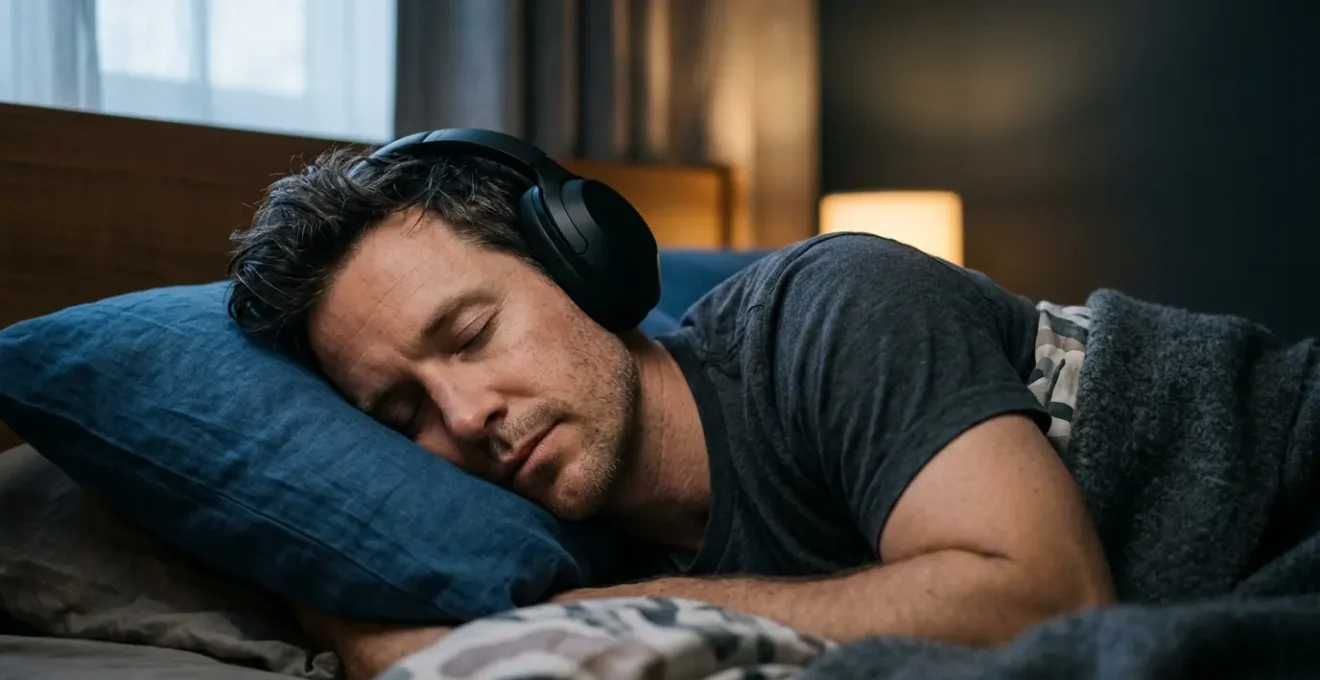
The effectiveness of binaural beats for sleep isn’t about choosing one magic frequency; it’s about mastering a precise neuro-acoustic calibration protocol.
- Success depends on non-negotiable technical factors, including absolute stereo isolation (headphones are mandatory) and controlled volume.
- A timed « brainwave cascade » from Alpha to Theta to Delta waves before bed is significantly more effective than listening to a single frequency.
Recommendation: Stop passively playing sleep tracks and start actively managing your listening environment and frequency sequence to unlock the true potential of binaural beats for deep sleep.
For insomniacs exploring ways to bio-hack their sleep cycle, binaural beats often emerge as a promising, non-pharmacological solution. The common advice is deceptively simple: put on some headphones and listen to « delta waves » to drift into deep sleep. Yet, many users report frustratingly inconsistent results, leading them to dismiss the technique as a mere placebo. The reality is that the internet is saturated with simplistic advice that ignores the fundamental science of brainwave entrainment.
This approach overlooks critical variables. It fails to distinguish between the energizing effects of high-frequency music and the specific, targeted influence of an isolated beat. It doesn’t account for why a track might sound powerful on one device but ineffective on another. The core issue is a misunderstanding of the mechanism at play. Binaural beats are not a passive soundscape; they are a precise tool for manipulating brainwave states.
But what if the key wasn’t simply choosing between Theta and Delta frequencies, but in understanding the entire system of delivery? The truth is that without a proper protocol—one that considers stereo isolation, volume, timing, and frequency sequencing—you are setting yourself up for failure. This guide moves beyond the platitudes to give you the operational manual for effective neuro-acoustic calibration. We will deconstruct the process, explaining why each variable is critical and providing a clear, science-backed framework to help you finally achieve the desired outcome: deep, restorative sleep.
This article will dissect the essential components for successfully using sound to influence your brain’s activity. From the mandatory hardware to the precise timing of your sessions, you’ll gain a consultant-level understanding of how to make this technology work for you.
Summary: Theta or Delta: Which Binaural Beat Frequency Aids Deep Sleep?
- Why Binaural Beats Fail Without Stereo Headphones?
- Alpha Waves or Beta Waves: What to Listen to for Deep Work?
- How Loud Is Too Loud for Prolonged Binaural Listening?
- The Expectation Effect: Does Believing in It Make It Work Better?
- Sequencing & Planning: Timing Your Binaural Session Before Bed
- Mozart or Gregorian: Why High Frequencies Energize the Brain?
- Headphones or Speakers: Why Your Atmos Mix Sounds Different on Apple Music?
- How Sound Baths Reduce Cortisol Levels in High-Stress Professionals?
Why Binaural Beats Fail Without Stereo Headphones?
The single most common point of failure in using binaural beats is a misunderstanding of the delivery mechanism. This technology is not based on a single sound but on an auditory illusion created inside your brain. For this to occur, a fundamental, non-negotiable technical requirement must be met: perfect stereo separation. A binaural beat is generated when two slightly different frequencies are presented independently to each ear. For example, your left ear might receive a 200 Hz tone, while your right ear receives a 203 Hz tone. Your brain, in its effort to process this discrepancy, perceives a third, phantom « beat » at the difference between the two frequencies—in this case, 3 Hz, a Delta wave frequency associated with deep sleep.
This perceptual trick is the entire basis of the frequency-following response (FFR), where your brain’s own electrical cycles start to synchronize with the external phantom beat. Without headphones, this effect is impossible. When listening through speakers, sound from both channels reaches both ears (a phenomenon called « crosstalk »), destroying the clean separation needed for the brain to create the beat. The two tones simply mix in the air before they ever reach you.
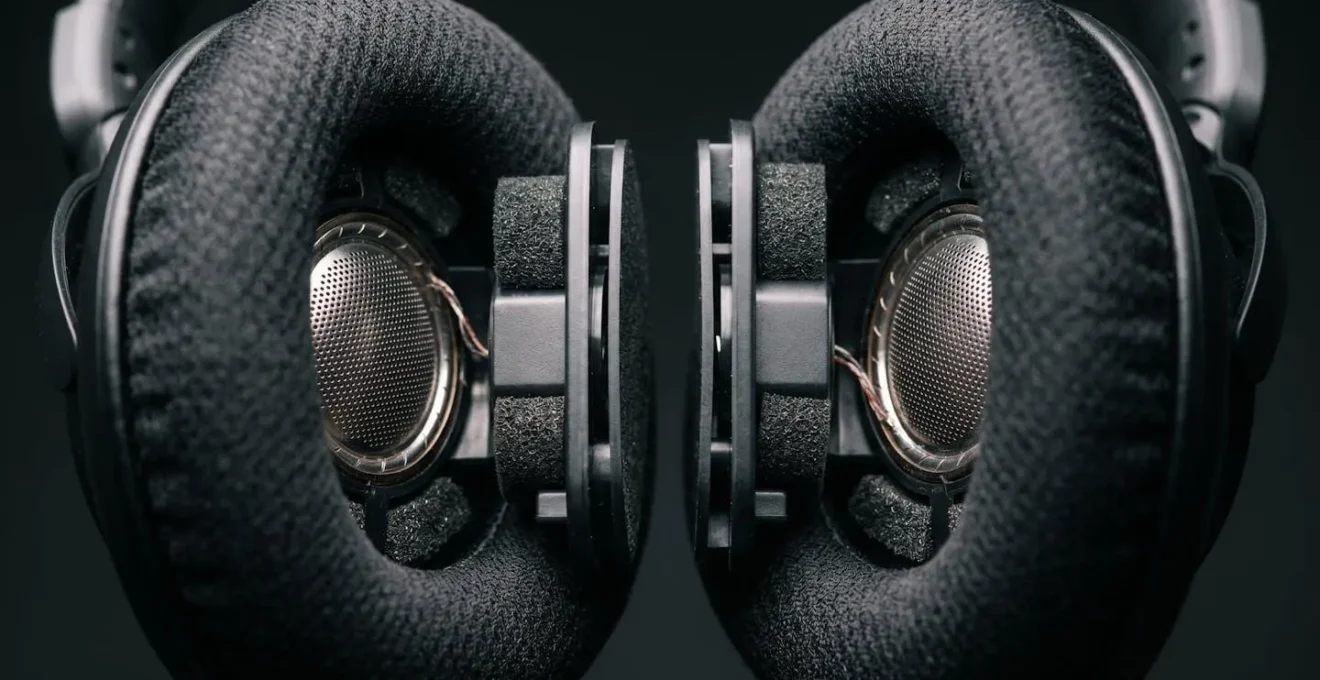
Therefore, any attempt to use binaural beats without headphones is fundamentally flawed. As researchers in live music brainwave entrainment confirm, « Complete stereo isolation (headphones) is necessary for listening to and experiencing these brainwaves properly. » This isn’t a suggestion; it’s a prerequisite dictated by the psychoacoustic principles that make the technology work. It requires slightly different frequencies delivered to each ear separately to create the effect.
Alpha Waves or Beta Waves: What to Listen to for Deep Work?
While our primary focus is sleep, understanding how different frequencies affect cognitive states like focus provides crucial context. It reinforces the core principle that specific frequencies produce specific, predictable mental outcomes. For tasks requiring high concentration, or « deep work, » the target brainwave states are entirely different from those for sleep. The goal is not relaxation but a state of calm, alert focus. This is where Alpha and Beta waves come into play. Alpha waves (8-13 Hz) are associated with a state of relaxed wakefulness and effortless alertness, excellent for creative tasks or quieting mental chatter before a work session.
For more intense, analytical tasks that require sharp concentration, low-Beta waves (13-20 Hz) are more appropriate. This state is linked to active problem-solving and focused attention. However, prolonged exposure to Beta frequencies can lead to mental fatigue or « Beta burnout. » This is why a strategic sequencing, or « brainwave cycling, » is often recommended by practitioners for sustained cognitive performance. This demonstrates that effective brainwave entrainment isn’t about playing one frequency on a loop, but about guiding the brain through different states for optimal results.
This principle of sequencing is directly transferable to sleep protocols. Just as you wouldn’t jump straight into a high-intensity workout without a warm-up, you shouldn’t expect your brain to leap from an active Beta state directly into a deep Delta sleep state. The transition must be guided. By understanding that neuroscience research indicates that the Alpha and low-Beta range are targets for focus, we validate the idea that other frequencies are targets for other states, like sleep.
Action Plan: Brainwave Cycling for Sustained Focus
- Adaptation Phase: Start with short sessions of 10-15 minutes to allow your brain to adapt to the stimulation.
- Settle In (Alpha): Begin with Alpha frequencies (8-13 Hz) to settle into a focused state and quiet mental chatter.
- Intense Sprint (Beta): Transition to low-Beta frequencies (13-20 Hz) for 45-minute work sprints requiring intense concentration.
- Cognitive Reset (Alpha): Take 10-minute Alpha breaks between sprints to prevent ‘Beta burnout’ and maintain cognitive endurance.
- Strengthen Pathways: Practice regularly to leverage neuroplasticity and strengthen the neural pathways associated with sustained attention.
How Loud Is Too Loud for Prolonged Binaural Listening?
After ensuring proper stereo separation, the next critical variable to control is volume. A common mistake is to assume that « louder is better » or that the binaural beat needs to dominate your auditory field to be effective. The opposite is true. The goal is to create a subtle-yet-perceptible stimulus, not to trigger an auditory assault. Excessive volume can be counterproductive and even harmful, introducing two primary problems: the alerting response and auditory fatigue.
First, the brain is hardwired to interpret loud, sudden sounds as a potential threat. Cranking up the volume can trigger an alerting response, increasing cortisol and vigilance—the very opposite of the relaxed state needed for sleep. Instead of guiding your brain toward slower frequencies, high volume tells it to be on guard. As brainwave entrainment practitioners advise, « Keep it at a comfortable, moderate volume. Too loud can reduce effectiveness. » The beat should feel like a gentle pulse in the background, not a pounding drum.
Case Study: The Minimal Perceptible Volume Principle
For optimal results, the volume should be set at the lowest level where the beat is just barely perceptible beneath the carrier tones (the audible hum or music). This approach minimizes auditory fatigue and reduces the risk of developing tinnitus from prolonged headphone use. Listening for at least 15 to 20 minutes per session at this moderate volume is sufficient. The goal is gentle persuasion of the brain’s frequencies, not forceful auditory driving, which is more likely to induce relaxation than an alerting response.
Think of volume as your auditory dosage. The correct dose is the minimum effective amount. A good rule of thumb is to set the volume to a comfortable level for the carrier tone (e.g., pink noise, ambient sounds) and then ensure the binaural « wobble » is just noticeable within that soundscape. If you find yourself wincing or feeling an urge to lower it, you’ve already gone too far.
The Expectation Effect: Does Believing in It Make It Work Better?
One of the most persistent debates surrounding binaural beats is the role of the placebo effect. Skeptics often argue that any perceived benefits are simply the result of expectation—if you believe it will help you sleep, it will. While belief and mindset are undeniably powerful factors in any wellness practice, dismissing binaural beats as pure placebo ignores the underlying mechanical process of the frequency-following response (FFR). The FFR is a neurological, bottom-up process; the brain’s tendency to synchronize with external rhythmic stimuli is a documented phenomenon. However, the relationship between this mechanical process and subjective belief is complex.
Interestingly, the evidence for a simple placebo effect is not clear-cut. In fact, some research points in the opposite direction. For instance, a 2023 study in Scientific Reports found that home-use binaural beats stimulation actually worsened cognitive task scores in one test, challenging the idea that positive belief automatically leads to positive outcomes. This suggests that other variables, like frequency choice and listening conditions, are far more important than belief alone.

A 2023 systematic review further highlights the contradictions in study outcomes but confirms that the brain can perceive beats in the 1-30 Hz range, which aligns with major EEG frequency bands. It suggests the FFR can occur as a mechanical process, independent of belief. The most effective approach, therefore, is to see belief not as the *cause* of the effect, but as a *catalyst*. Creating a consistent pre-sleep ritual—dimming the lights, avoiding screens, practicing deep breathing—primes your brain for sleep. In this context, binaural beats become a powerful tool within a larger, intentional process. You are creating the optimal mental and physical conditions for the technology to do its mechanical work.
Sequencing & Planning: Timing Your Binaural Session Before Bed
You have the right headphones, the right volume, and the right mindset. The final and most crucial piece of the puzzle is the timing and sequencing of your session. Simply hitting « play » on a Delta wave track as you get into bed is a common but suboptimal strategy. An effective pre-sleep protocol should act as a « brainwave cascade, » gently guiding your brain down from the active Beta state of daily life, through the relaxed Alpha and drowsy Theta states, and finally into the deep sleep of Delta.
The duration of exposure also matters. While short sessions can be relaxing, research suggests that more extended exposure is needed for significant sleep improvements. For example, a 2022 pilot study published in PMC demonstrated that 90 minutes of exposure to 3 Hz Delta binaural beats led to enhanced sleep quality, fewer awakenings, and better post-waking feelings. While 90 minutes may be long for a pre-sleep routine, it underscores that a brief 10-minute session may not be sufficient to induce lasting changes in brainwave patterns.
A more practical and highly effective approach is a sequenced protocol that mirrors the brain’s natural process of falling asleep. This « cascade » approach prepares the brain for each subsequent stage, making the transition into deep sleep smoother and more natural. This is not just a playlist; it is a structured, timed intervention designed to work with your biology.
Action Plan: Pre-Sleep Brainwave Cascade Protocol
- Optimal Start Time: Begin your session 90-120 minutes before your intended sleep time to align with your body’s natural dip in core temperature and rise in melatonin.
- Unwind Phase (Alpha): Start with 10 minutes of Alpha frequencies (8-12 Hz) to disengage from the day, reduce mental chatter, and signal to your body that it’s time to relax.
- Drowsiness Induction (Theta): Transition to 10 minutes of Theta frequencies (4-8 Hz). This is the state associated with light sleep and deep meditation, bridging the gap between wakefulness and sleep.
- Deep Sleep Guidance (Delta): Complete the audio portion with at least 10-20 minutes of Delta frequencies (0.5-4 Hz) to encourage the brain toward the deep, restorative stages of sleep.
- Silent Settling Window: Allow for a 10-minute silent period after the track ends. Do not check your phone or turn on bright lights. Let your brain settle into its new state naturally.
Mozart or Gregorian: Why High Frequencies Energize the Brain?
To fully appreciate why low-frequency Delta waves are used for sleep, it’s helpful to understand the opposite end of the spectrum: how high frequencies can energize the brain. This isn’t just about tempo; it’s about the brain’s response to specific sonic characteristics. While binaural beats provide a very direct, targeted form of entrainment, complex musical compositions like those by Mozart or even the layered harmonics of Gregorian chants can also stimulate distinct brainwave activity.
The key factor is not just « high pitch, » but harmonic complexity. Music rich in complex, layered harmonic structures and overtones can stimulate Gamma brainwave activity (above 30 Hz). Gamma waves are associated with high-level information processing, peak focus, and « binding » different senses into a single, coherent experience. According to brainwave entrainment research literature, this isn’t an accident; the intricate patterns in the music act as a cognitive workout, pushing the brain into a state of high-level cognition. This is part of the reason certain types of classical music are anecdotally linked to improved focus during study.
This further reinforces our central thesis: the brain’s electrical activity is not immune to the acoustic environment. It responds in predictable ways to specific sonic inputs. For alertness and focus, studies often focus on Beta (12-36 Hz) and Gamma (>36 Hz) frequencies. For deep sleep, the target is the opposite end of the scale: Theta (4-8 Hz) and Delta (0.5-4 Hz). Understanding this dichotomy is key to building an effective neuro-acoustic toolkit. You learn to select the right sonic tool for the desired mental state—high complexity and frequency for energy, and low, simple frequencies for rest.
Headphones or Speakers: Why Your Atmos Mix Sounds Different on Apple Music?
The discussion about stereo separation for binaural beats is deeply connected to the modern world of spatial audio, like Dolby Atmos on Apple Music. Listeners often notice that a mix sounds drastically different on headphones versus speakers, and this difference reveals the same psychoacoustic principles at work. The key is understanding the Head-Related Transfer Function (HRTF), which is essentially your brain’s unique auditory fingerprint for perceiving sound in three-dimensional space.
When you listen through speakers, sound waves interact with the room, your head, and your outer ears before entering the ear canal. Your brain uses these subtle delays and modifications to place the sound in space. Spatial audio technologies like Atmos try to replicate this effect on headphones by using complex algorithms to simulate an HRTF. However, this is an *average* HRTF and may not perfectly match your own, which is why spatial audio can sound amazing to one person and unnatural to another.
HRTF and the Binaural Illusion
The creation of a binaural beat is a prime example of the brain’s unique processing. It relies on the perceptual integration of two distinct signals arriving at each ear below 1000 Hz. This process, which creates the sensation of a third beat, is a function of how your brain interprets phase differences via its personal HRTF. This is why any « spatial audio » or « 3D sound » processing must be disabled for binaural beats to work. These features are designed to create a sense of space by blending and manipulating the stereo channels, which is the exact opposite of the strict, isolated separation required for the binaural illusion.
As binaural beats specialists often caution, it is critical to « Disable any spatial audio, immersive sound, or 3D audio processing in your device settings. » These features are designed to enhance music listening by creating a virtual speaker environment, but in doing so, they completely destroy the precise stereo isolation that binaural beats depend on. Your quest for deep sleep requires a « pure » stereo signal, not one that has been « enhanced » for a 3D soundscape.
Key Takeaways
- Binaural beats require absolute stereo isolation (headphones only) and moderate volume to prevent a counterproductive alerting response.
- Effectiveness is not about a single « magic » frequency, but about a timed « brainwave cascade » that guides the brain from an active state (Alpha) to a deep sleep state (Delta).
- Belief and ritual (the expectation effect) can amplify results, but they are a catalyst for, not a replacement of, the mechanical Frequency-Following Response.
How Sound Baths Reduce Cortisol Levels in High-Stress Professionals?
Stepping back from the targeted technology of binaural beats, we see the same principles at play in broader sound therapies like sound baths. For high-stress professionals, who often operate in a state of chronic sympathetic nervous system activation (the « fight-or-flight » response), sound baths offer a powerful method for promoting a shift to the parasympathetic « rest-and-digest » state. This is not just a subjective feeling of relaxation; it is a measurable physiological change.
The primary mechanism is the reduction of cortisol, the body’s main stress hormone. The resonant frequencies produced by instruments like singing bowls and gongs create a « vibrational massage » for the body and nervous system. This immersive soundscape helps to quiet the analytical mind and reduce the mental rumination that often keeps stress levels high. While research is ongoing, recent clinical research shows that sound baths have been linked to lower cortisol levels and improved heart rate variability (HRV), a key marker of resilience to stress.
Observational Study: The Effects of Singing Bowl Meditation
A widely cited observational study by Goldsby et al. provided strong evidence for the benefits of sound-based meditation. Participants in singing-bowl sessions reported significant reductions in tension, anger, fatigue, and depressed mood. These subjective improvements were accompanied by physiological markers indicating increased parasympathetic activity, such as improved HRV. The research suggests that sound baths are a safe, low-risk, and effective tool for reducing subjective stress and promoting a deep state of relaxation, making them a valuable tool for managing the pressures of a professional career.
Whether through the targeted pulses of binaural beats or the rich, harmonic wash of a sound bath, the conclusion is the same: intentional sound is a powerful tool for modulating our inner state. It provides a direct pathway to influencing our nervous system, moving us from states of high stress to deep relaxation. For the insomniac or the overworked professional, learning to wield this tool effectively is a critical skill for modern wellness.
By moving beyond passive listening and embracing a role as an active calibrator of your own neuro-acoustic environment, you transform binaural beats from a hit-or-miss curiosity into a reliable component of your sleep hygiene toolkit. Start tonight by implementing the pre-sleep cascade protocol and taking control of the variables that truly matter.